
Preparing Approved Materials for Bulk Bra Production
Material inspection and cutting are the first production stages after the fabric, lace, color and construction have been approved. Errors at this point can affect shade consistency, panel dimensions, lace alignment, cup symmetry and material consumption throughout the bulk order.
Before production, we compare the received fabric and components with the approved sample or material reference. The check is based on the buyer’s specification and the requirements of the particular bra style rather than one fixed standard for every order.
Sports bras, lace bras, bralettes, nursing bras and plus size bras use different combinations of stretch fabrics, lining, mesh, elastic, foam and supporting components. These differences determine how materials should be inspected, spread and cut.
Incoming Fabric and Component Checks
Incoming materials may include nylon/spandex, polyester/spandex, cotton blends, lace, mesh, lining, seamless fabrics, foam, elastic, straps and hook-and-eye components. The inspection normally covers material identity, color, width, visible surface condition and compatibility with the approved specification.
Stretch and recovery are important for bra bands, wings and support panels. A material that looks correct but behaves differently from the approved sample can change the finished measurement or fit. Shade variation also needs attention when materials come from different rolls or dye lots.
For buyers still confirming suitable materials, our fabric, lace and component options page explains the main choices used in OEM and private-label bra development.
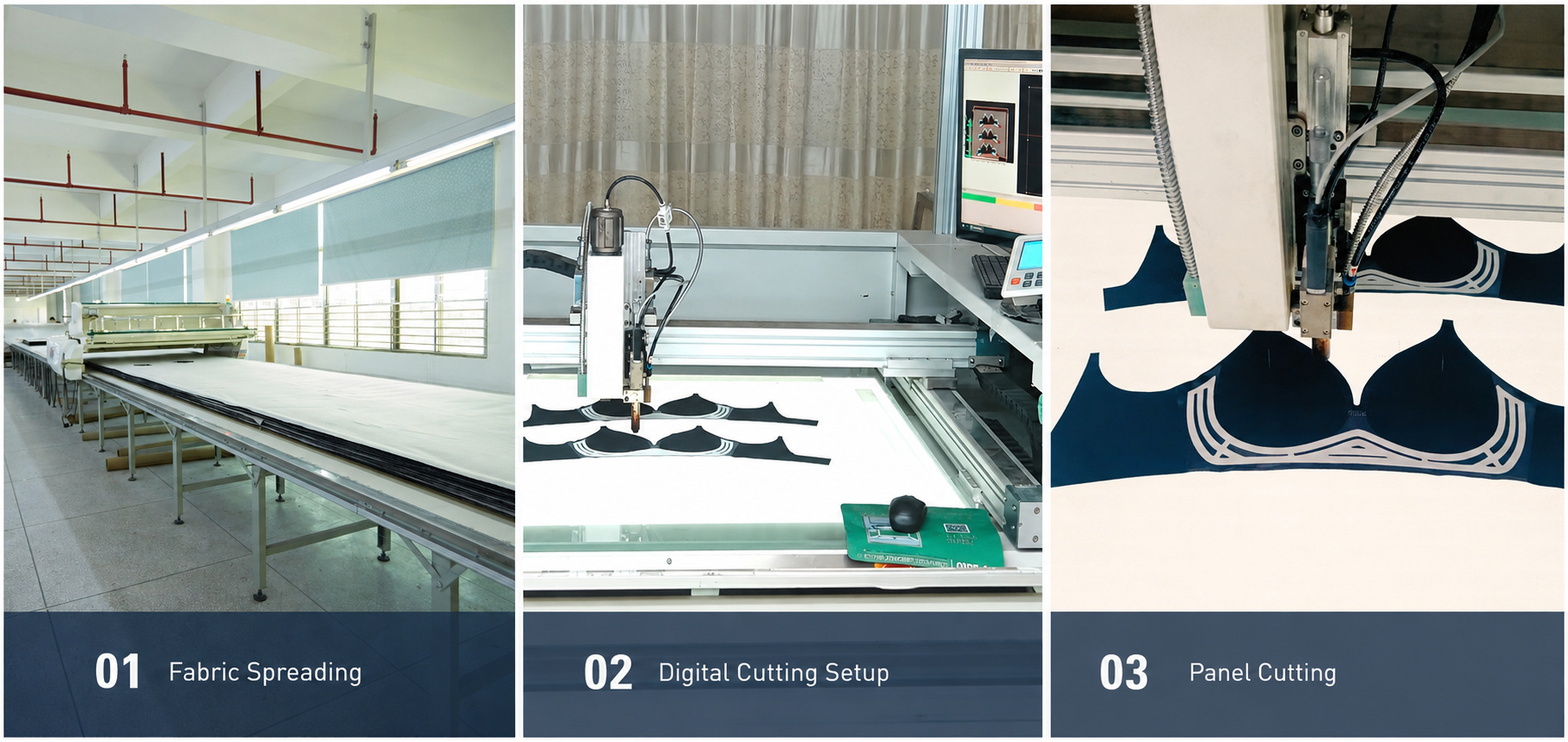 Fabric Relaxation, Spreading and Cutting Preparation
Some stretch fabrics need time to relax before cutting so that tension introduced during rolling or transportation does not distort the cut panels. The required preparation depends on the fabric structure and the approved production method.
Fabric is spread in controlled layers according to the cutting plan. The team reviews fabric direction, usable width, shade grouping and visible defects before cutting begins. Materials with pile, directional prints or engineered stretch require particular attention to panel orientation.
Lace may need manual positioning when the design requires motif placement or left-to-right visual balance. Incorrect placement can create noticeable differences between cups even when the panel dimensions are technically correct.
Pattern Layout and Panel Cutting
Cutting follows the approved pattern and size grading. The marker layout is planned around the required sizes, order ratio and usable fabric width. Pattern direction and matching requirements are considered before the cutting file or layout is released.
Automatic cutting equipment can be used for suitable fabric layers and production quantities. More delicate lace, mesh or style-specific components may require adjusted handling depending on the material and design.
Cutting accuracy directly influences cup balance, band length, seam alignment and assembly efficiency. It also affects quotation because fabric width, pattern layout, size assortment and material usage determine the actual consumption per piece.
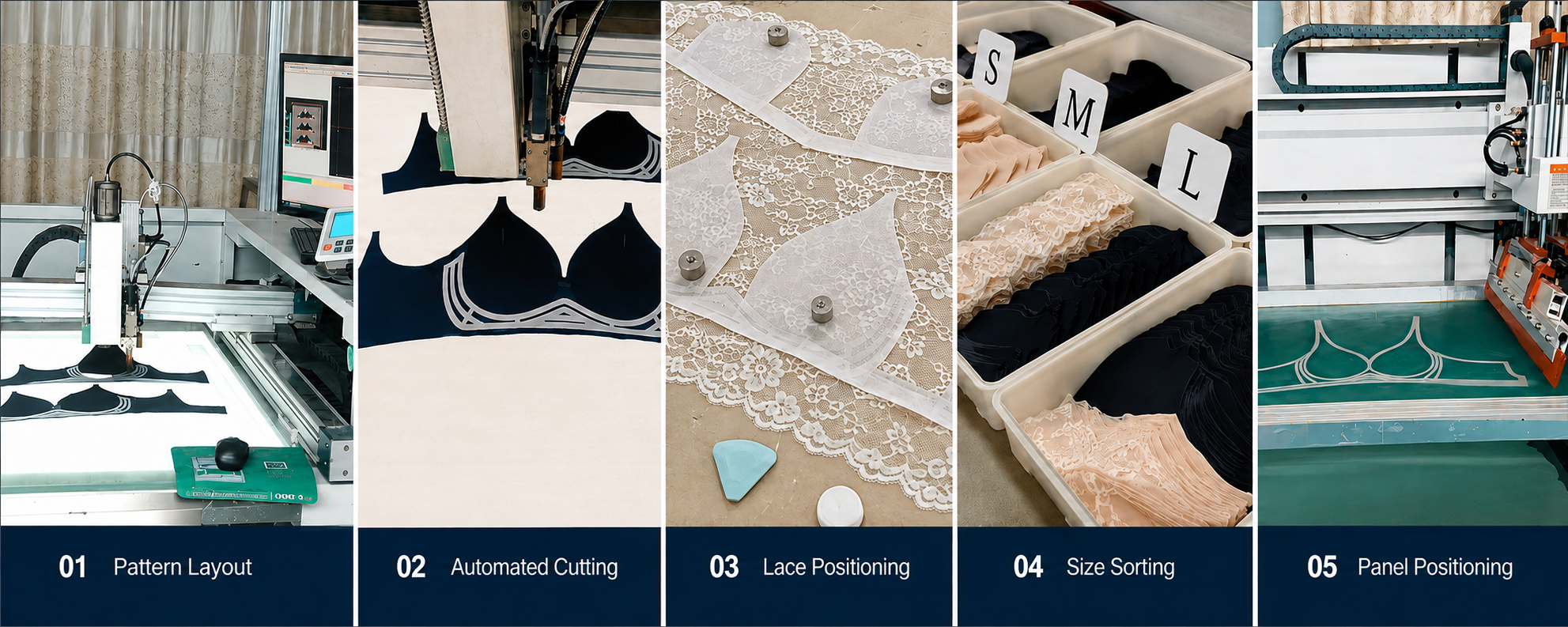 Cut Panel Identification and Production Handover
After cutting, panels are separated and identified by style, size, color and production group. Clear identification reduces the risk of mixing similar panels during sewing, especially when one bulk order includes several colors or an extended size range.
The prepared panels are transferred to the relevant sewing or assembly operation together with the approved construction requirements. You can review the next production stage on our bra sewing and elastic attachment page.
In-process measurement and symmetry checks later confirm whether the cut panels and assembled product remain consistent with the approved specification.
Information That Affects Cutting Cost and Timing
For an accurate quotation and production plan, buyers should provide the tech pack or reference sample, fabric composition, color quantity, size chart, size ratio, order quantity and any lace-placement or print-matching requirements.
Material MOQ, custom dyeing, wide size assortments, directional patterns and complex lace placement can increase consumption, preparation time or cutting cost. These details should be reviewed during sampling rather than after bulk materials have been ordered.
Final cutting arrangements are confirmed after the materials, graded patterns and required pre-production sample have been approved.