
Construction Selected Around Fit and Support
Cevaniq Bras supports cup, padding and construction development for sports bras, lace bras, bralettes, nursing bras, plus size bras and invisible bras. The correct solution depends on the intended support, coverage, size range, fabric, target market and price position.
Development can begin with a tech pack, physical reference sample or selected factory style. Before sampling, we review the cup shape, padding thickness, wire or wireless structure, neckline, bridge, wings, straps and closure method as one complete system.
Changing one component can affect the finished fit. Thicker padding may alter cup volume, while a different fabric or elastic can change band stability and support.
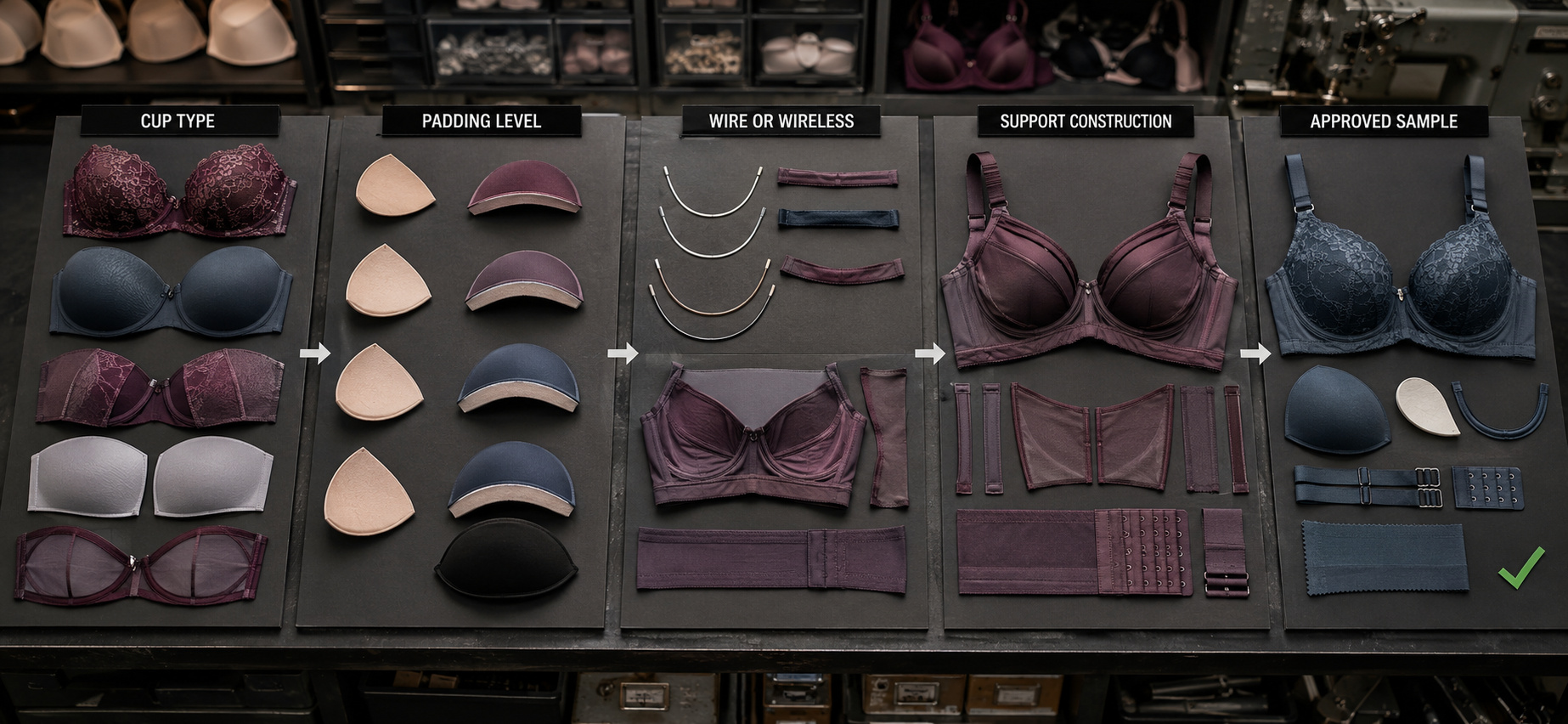 Soft Cup and Molded Cup Options
Soft cups are assembled from fabric, lace, mesh or lining panels. Their shape depends on the pattern, seams, fabric stretch and internal reinforcement. They are commonly used for lace bras, bralettes, nursing bras and selected plus size programs.
Molded cups are formed to create a defined shape and smoother appearance. Important points include:
- Cup profile and depth
- Foam thickness and density
- Cup edge shape
- Left and right symmetry
- Compatibility with the size range
- Recovery after packing
- Surface and lamination quality
Suitable molded styles can proceed through Cup Molding & Heat Bonding after the cup specification and sample are approved.
Padding Thickness and Placement
Padding can be fixed, removable or integrated into the cup construction. Common directions include light lining, thin foam, medium padding and localized push-up padding.
The selected padding affects cup capacity, appearance, support and material consumption. Removable pads require suitable pocket construction and a stable opening, while fixed padding must remain aligned during sewing, bonding and washing.
Buyers should specify the desired thickness, shape and placement rather than requesting only a “padded bra.” A physical sample or cup reference is useful when the intended profile is difficult to explain through photographs.
Wire, Wireless and Support Structures
Underwire construction can provide defined cup separation and support, but the wire shape, channel, cup pattern and cradle must be compatible. The wire should not be selected independently from the approved cup and size range.
Wireless support can be developed through:
- Shaped cup seams
- Wider underbands
- Reinforced wings
- Inner support panels
- Stable elastic
- Wider straps
- Bonded or laminated sections
Sports and plus size bras may require stronger bands, broader straps or reinforced side structures. Nursing bras require support that works with the opening function and adjustable fit.
Materials and supporting components can be coordinated through Fabric, Lace & Component Options.
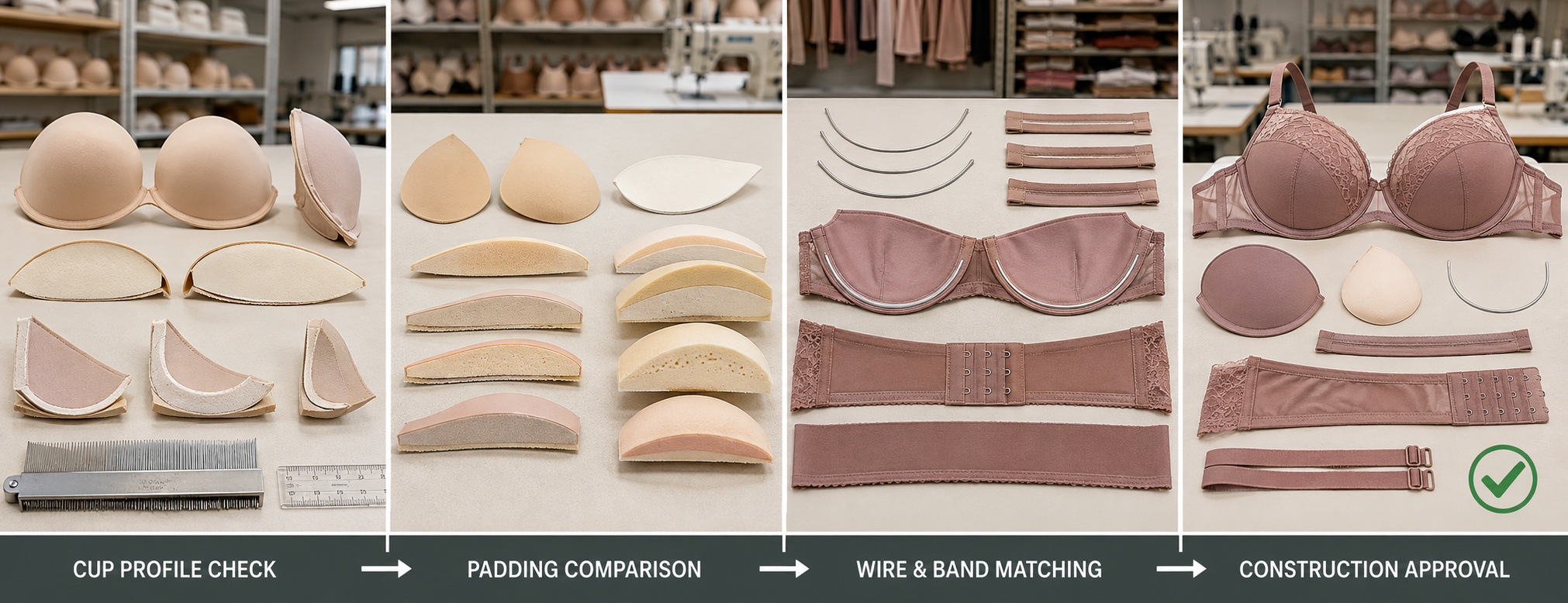 Prototype and Fit Sample Approval
The first sample is used to evaluate cup shape, coverage, symmetry, neckline, bridge, band stability and strap position. Cup or padding changes may require a revised pattern and another sample.
Fit comments should identify the tested size and exact area requiring adjustment. Once the base sample is accepted, the construction can proceed through Size Grading & Fit Adjustment for the required band and cup range.
The approved sample becomes the reference for material preparation, molding or cutting, sewing, assembly and bulk inspection.
Bulk Quality Control
In-process and final checks may cover:
- Cup shape and left/right symmetry
- Padding position and thickness
- Wire and channel alignment
- Band and wing measurements
- Strap placement
- Seam and bonding quality
- Comparison with the approved sample
Detailed bulk checks are explained on the Size, Cup & Symmetry Inspection page.
MOQ, Sampling and Quotation Requirements
Standard orders generally start around 300–500 pieces per style. New cup specifications, custom foam, special components or private-label developments commonly require around 500–1,000 pieces or more.
For evaluation, send the bra style, size range, quantity, cup reference, padding thickness, wire or wireless requirement, fabric, support level and destination market. We will review feasibility, material MOQ, sampling requirements and estimated lead time before confirming the development plan.