
Bringing Approved Bra Components Together
Bra assembly begins after the required panels, cups, elastic, straps and supporting components have been prepared. At this stage, separate parts are brought together according to the approved sample, construction specification and size chart.
The assembly sequence depends on the product structure. A molded-cup bra, lace underwire bra, wireless bralette, sports bra and nursing bra require different components and operations. The production team therefore follows style-specific requirements rather than applying one assembly method to every order.
For sewn constructions, the previous operations are explained on our bra sewing and elastic attachment page.
Cup, Band and Wing Assembly
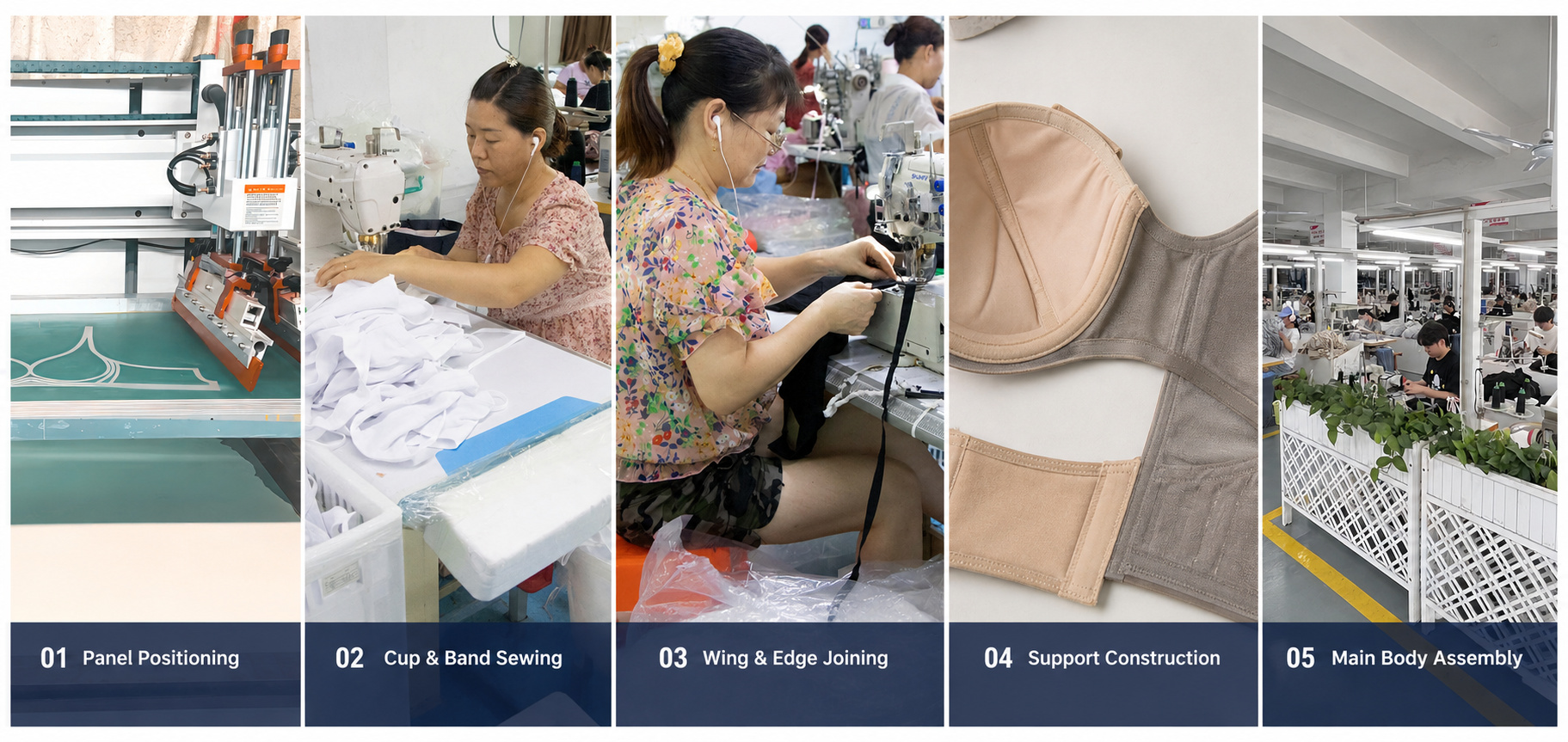
Cups are aligned with the cradle, bridge, band or supporting panels according to the approved pattern. Positioning affects cup balance, neckline shape, underband measurement and left-to-right symmetry.
Band and wing panels are assembled with attention to seam alignment, elastic tension and closure position. For underwire styles, the wire channel and selected wire must correspond with the cup and cradle construction. Wireless styles may use shaped seams, internal support panels or reinforced underbands instead.
Molded and bonded components require careful handling to avoid dents, distortion or visible marks during assembly. More information about these constructions is available on our cup molding and heat bonding page.
 Straps, Closures and Functional Components
Straps are attached at the approved front and back positions. Adjustable styles also require the correct rings, sliders and strap length. Attachment points may need reinforcement depending on the support level and size range.
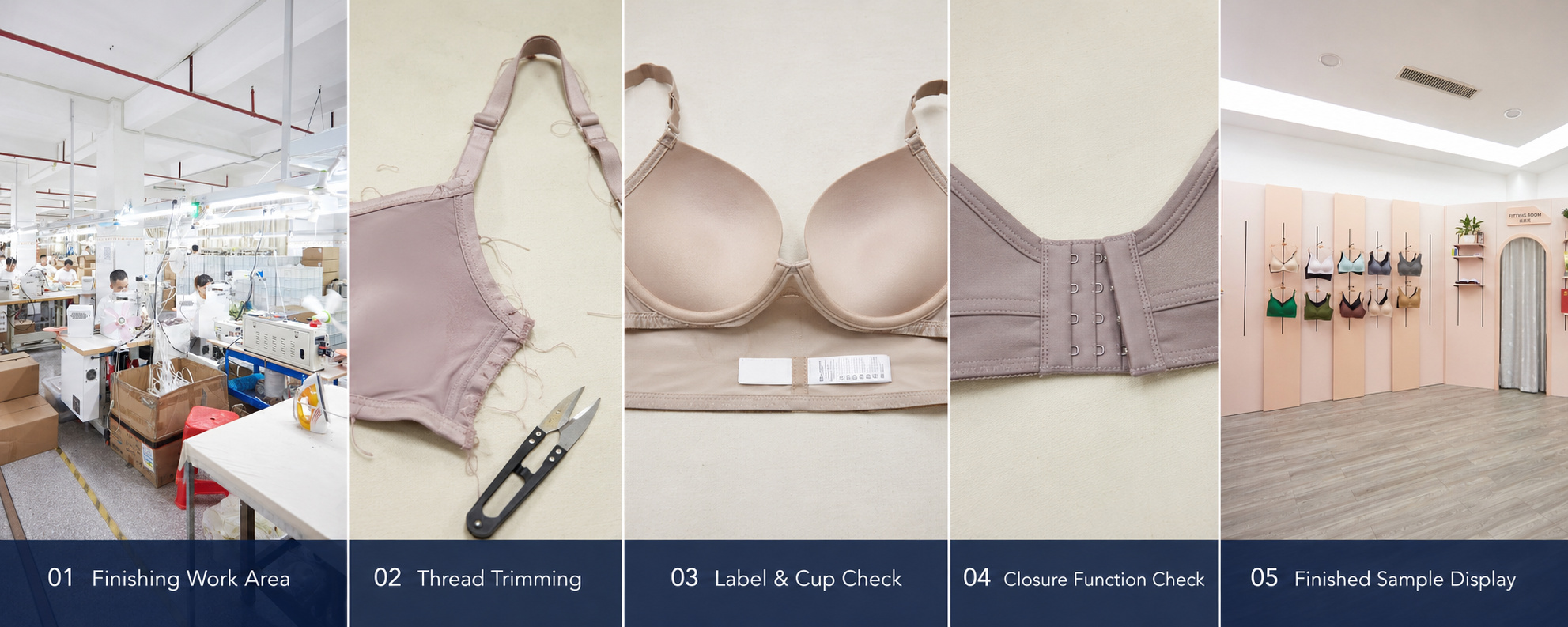
Rear hook-and-eye closures, front closures, nursing clips and removable strap components are checked for orientation, secure attachment and operation. An incorrectly positioned closure can change the band measurement or make the finished product difficult to use.
Labels are added according to the approved placement. These may include main labels, size labels and care labels. Label content, folding method, orientation and sewing position should be confirmed before bulk assembly.
Thread Trimming and Appearance Finishing
After assembly, finished bras are reviewed for loose threads, fabric marks, seam puckering, twisted elastic and incorrect components. Thread ends are trimmed without damaging lace, mesh or stretch fabric.
Cup shape, neckline, wings, straps and closures are arranged so that the product returns to the intended shape after handling. Molded cups require suitable stacking and temporary storage to reduce compression before packing.
Finishing is not limited to improving appearance. It also helps identify assembly problems before the order proceeds to final measurement and quality inspection.
 In-Process Assembly Checks
During assembly and finishing, the team checks component identity, cup alignment, symmetry, strap position, closure placement, stitching and appearance. Key measurements may also be reviewed where assembly can affect the finished dimensions.
Recurring issues are reported to the relevant operation before additional units continue through production. Completed bras are compared with the approved sample and specification rather than judged only by general appearance.
After finishing, products proceed to size, cup and symmetry inspection for final measurement and construction checks.
Information Needed Before Bulk Assembly
Buyers should provide the approved sample, construction details, component list, size chart, label files and placement instructions. Functional components such as nursing clips, front closures or removable straps should be confirmed during sampling.
Changes to components, label positions or packing presentation after production has started may affect cost and lead time. Bulk assembly begins after materials, trims and the required pre-production sample have been approved.