
 Bra Production from Approved Sample to Export Packing
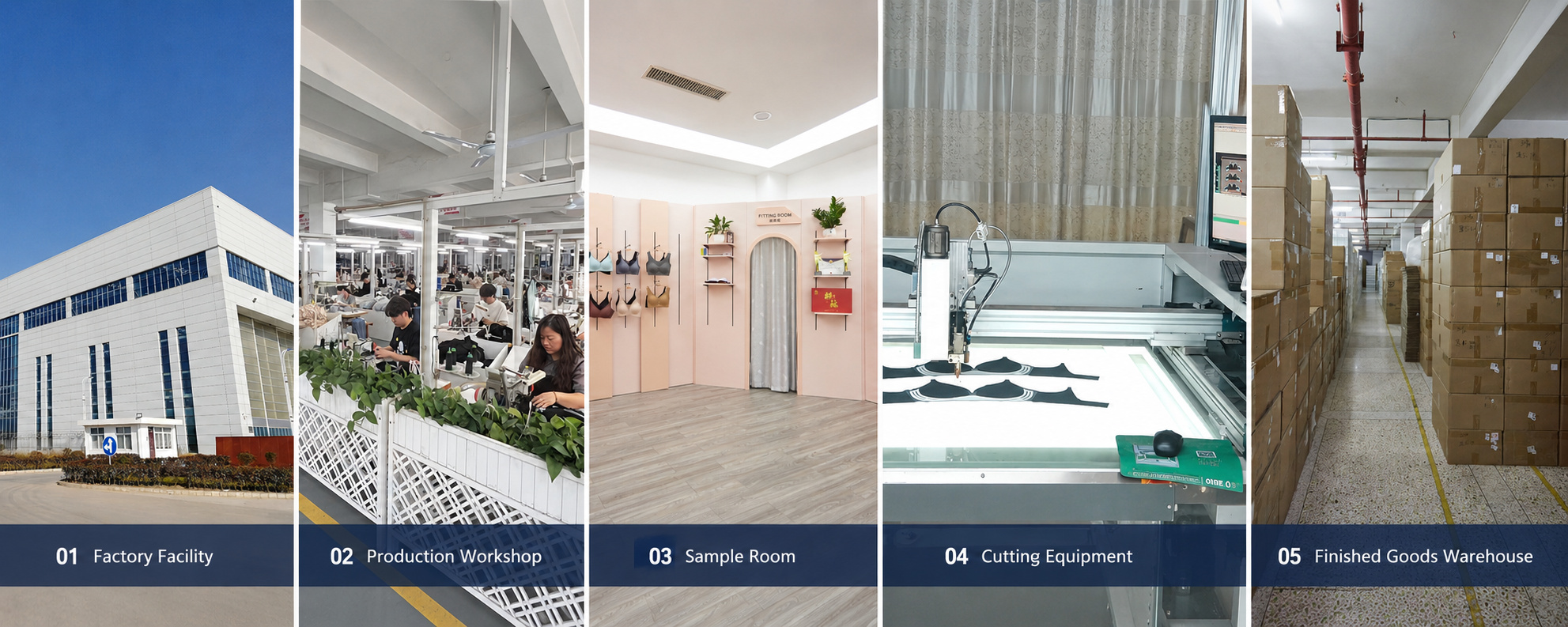
Cevaniq is a factory-based bra manufacturer in Gurao Town, Shantou, China. We manufacture sports bras, lace bras, bralettes, nursing bras, plus size bras and invisible bras for lingerie brands, importers, wholesalers, distributors and private-label buyers.
Bulk manufacturing begins after the product specification, materials, size range, colors, labels, packaging and required samples have been approved. Production methods are selected according to the bra construction. A cut-and-sew lace bra, molded-cup style and bonded sports bra do not follow exactly the same operations or use the same equipment.
Our production support covers fabric preparation, cutting, cup molding where required, sewing, elastic attachment, component assembly, finishing, inspection and export packing. Eight main production and assembly lines support an estimated monthly output of approximately 350,000–500,000 pieces, depending on construction, material availability, size assortment and order complexity.
Material Inspection and Fabric Preparation
Fabric, lace, mesh, elastic, straps, foam cups, hook-and-eye closures and other components are checked against the approved material specification before they enter production. The review may cover material type, shade, surface condition, stretch, recovery, width and order-specific requirements.
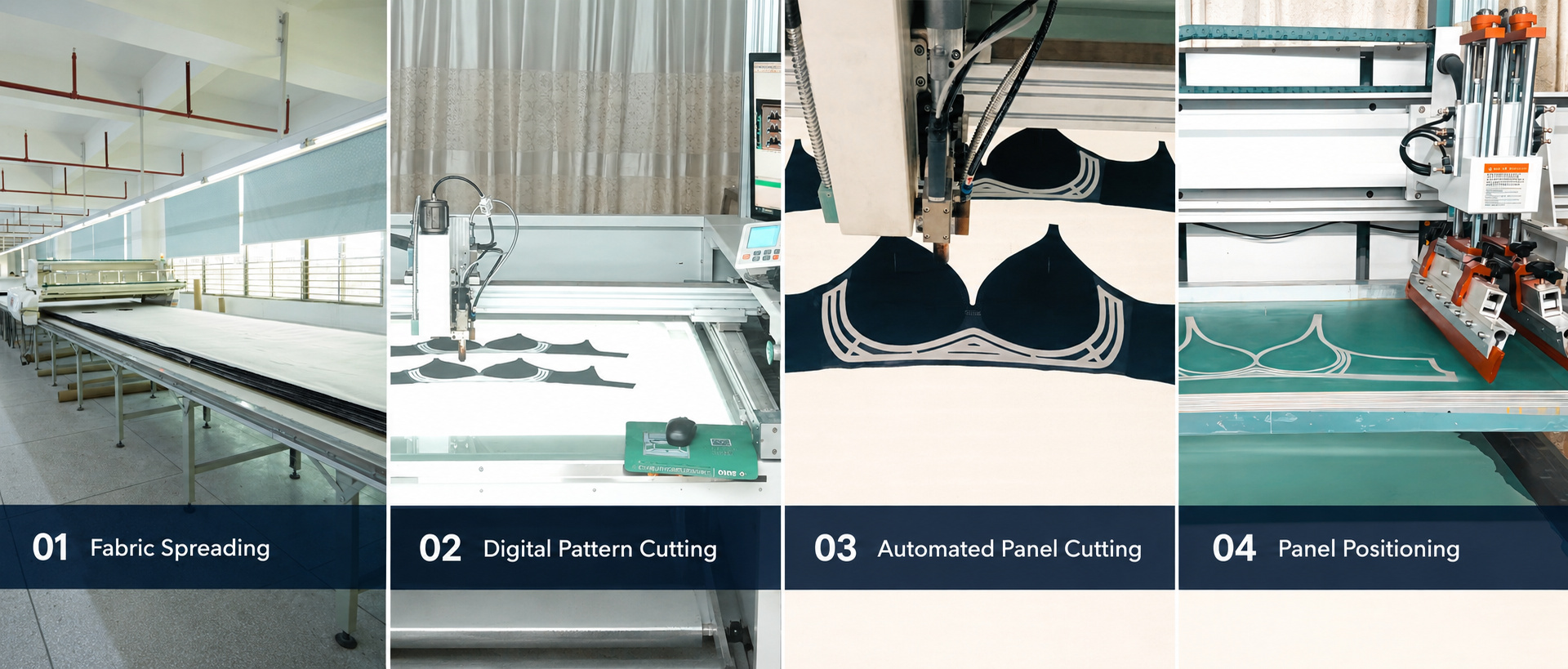
Fabric rolls are spread according to the required layer arrangement and cutting plan. Shade differences and material direction need attention because they can affect the appearance of completed bras. Lace placement may also require controlled positioning when the approved design includes symmetrical motifs or specific pattern alignment.
The detailed material inspection and fabric cutting process explains how approved materials are prepared before sewing and assembly.
 Cutting, Cup Forming and Component Preparation
Bra panels are cut according to the approved pattern and size grading. Accurate cutting affects cup balance, band dimensions, seam alignment and material consumption. Cut components should remain separated by style, color and size to reduce mixing during production.
For molded or padded styles, foam cups may require molding, shaping or heat-press processing. Bonded constructions may use controlled heat and pressure instead of conventional stitching in selected areas. Temperature, time, pressure and material compatibility must be confirmed during development because unsuitable settings can change cup shape, bonding strength or surface appearance.
Buyers sourcing molded, seamless or bonded products can review our cup molding and heat bonding capabilities in more detail.
Sewing, Elastic Attachment and Bra Assembly
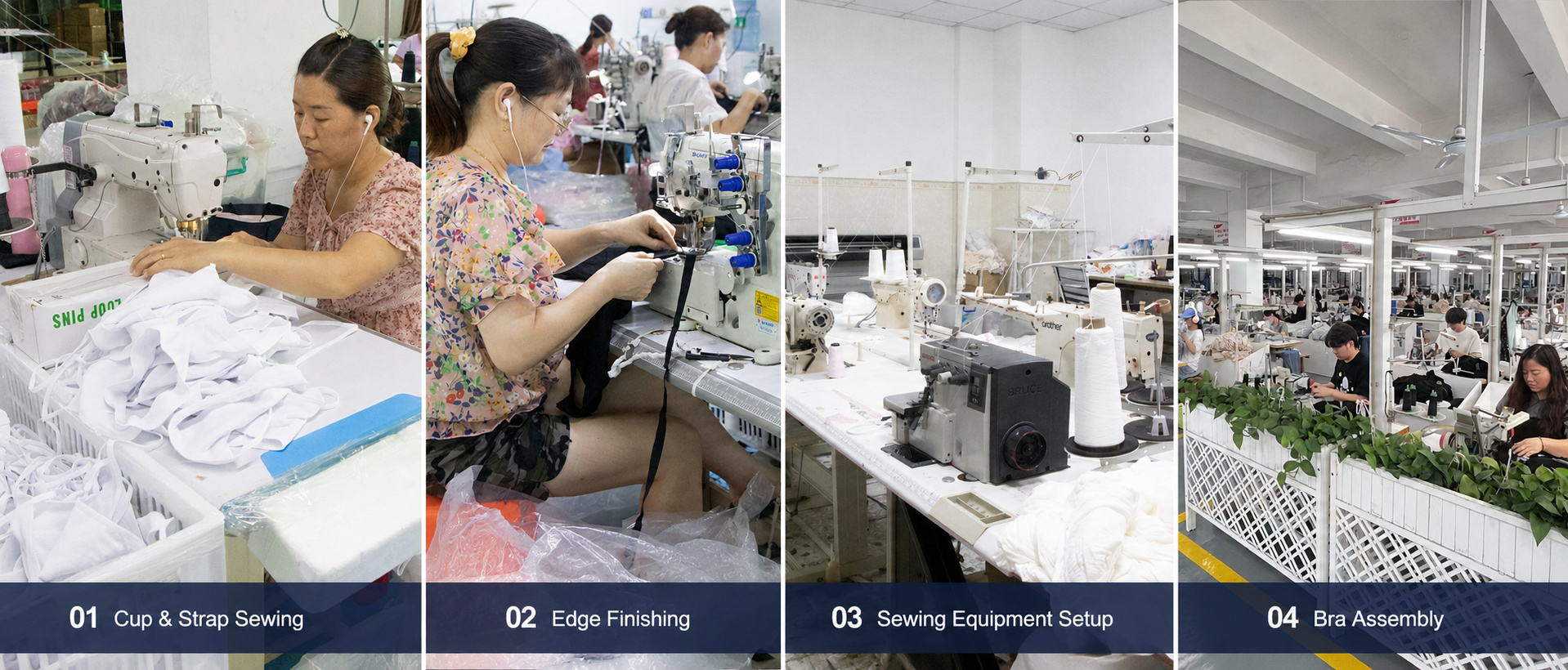
Bra production may use lockstitch, zigzag, overlock, coverstitch, bartack and elastic-attaching equipment. The required operation depends on the fabric, seam type, support structure and approved construction.
During sewing, operators assemble cups, cradle panels, wings, lining, straps, elastic, hooks, rings, sliders and trims in the specified sequence. Elastic tension must be controlled because excessive or insufficient tension can change the band measurement, cause twisting or produce inconsistent fit across a bulk order.
Cup alignment, strap position, underwire channels, hook-and-eye placement and left-to-right symmetry are reviewed during assembly. For detailed operation information, buyers can visit bra sewing and elastic attachment.
 Finishing and In-Process Control
After assembly, bras are trimmed and checked for loose threads, skipped stitches, puckering, contamination, visible marks and incorrect components. Labels, size identification and care information are compared with the approved order specification.
In-process checks help identify recurring problems before the order reaches final inspection. Measurement points may include band length, cup dimensions, wing height, strap position and other style-specific areas. The team also reviews cup profile, symmetry, elastic attachment, stitching appearance and functional openings for nursing or front-closure styles.
Production findings are evaluated against the approved sample, measurement chart and packing specification rather than a generic inspection standard.
Final Inspection, Needle Detection and Packing
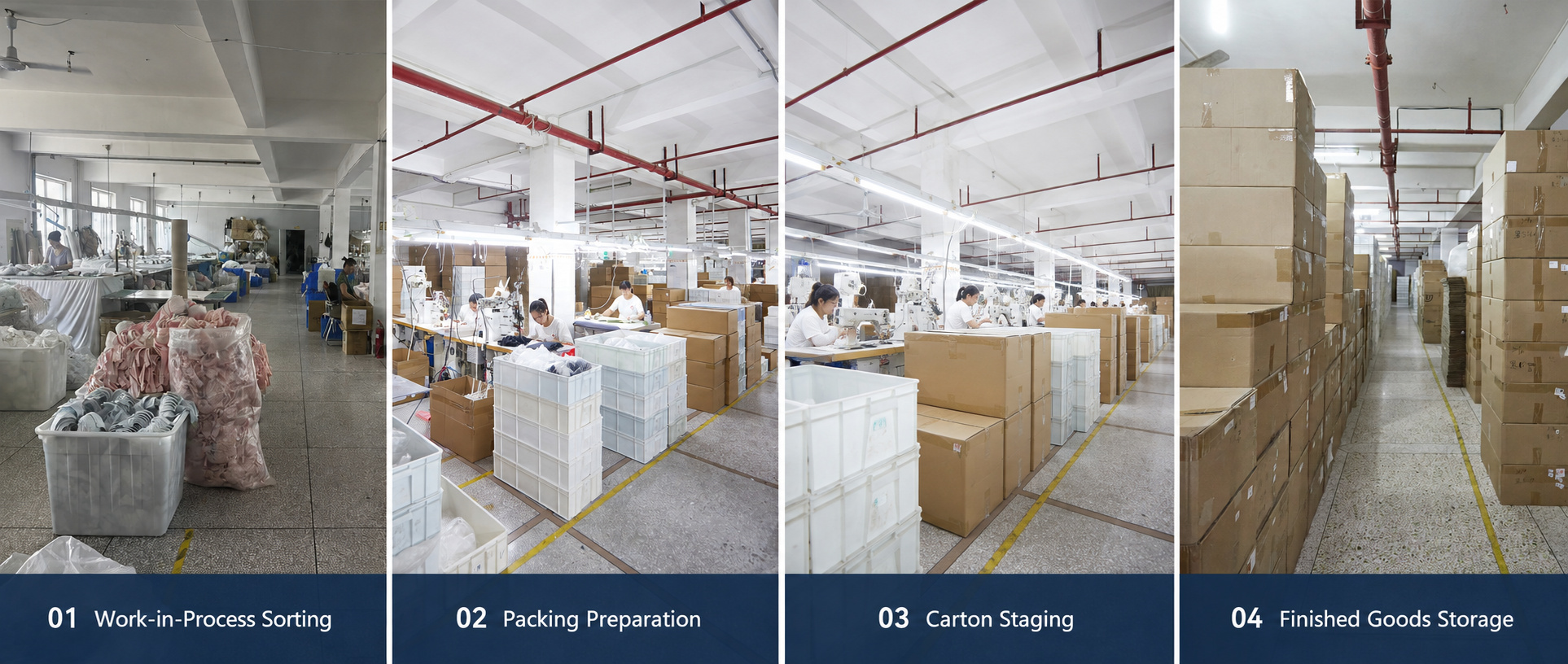
Finished bras undergo final checks for appearance, key measurements, cup shape, symmetry, stitching, labels, color, quantity and packaging. Needle detection can be included before packing according to the product and order requirements. Buyer-appointed or third-party inspection can also be coordinated when confirmed before shipment.
Packing may include individual polybags, insert cards, hangtags, barcode labels, color boxes and export cartons. Size and color assortments must match the approved packing list. Carton markings, quantities and protective arrangements are reviewed before shipment preparation.
Our packing and export shipment process provides further information about retail-ready packing, export cartons and shipping preparation.
 Information Needed to Plan Bulk Manufacturing
To evaluate production feasibility and timing, buyers should provide a tech pack or reference sample, size chart, order quantity, color breakdown, material requirements, cup construction, labels, packaging and destination market.
Standard bulk production is usually around 25–40 days after sample and material approval. Complex constructions, special materials or peak-season schedules may require approximately 40–50 days. Final timing is confirmed after reviewing material availability, production operations, order quantity and required inspections.