
Selecting the Correct Forming Method
Cup molding and heat bonding are used for suitable bra constructions, including selected molded-cup bras, padded bras, seamless styles, invisible bras and sports bras. These processes are not required for every product and should be confirmed during development according to the intended shape, support, materials and appearance.
Molded cups use controlled heat, pressure and forming tools to create the approved cup profile. Heat bonding joins compatible fabric layers, foam, support panels or edges without conventional stitching in selected areas.
The final result depends on material compatibility, cup shape, padding structure, temperature, pressure and processing time. A visually similar fabric may react differently during heating, so production settings should be confirmed using the actual approved materials.
Cup Material and Profile Confirmation
Before molding, the buyer and development team need to confirm the cup type, size range, padding level and required profile. Options may include thin molded cups, graduated padding, removable pads, fixed pads or other style-specific constructions.
Foam density, thickness and recovery affect the cup’s shape, support and appearance. Outer fabric and lining also need sufficient compatibility with the molding process. Excessive heat can change color, gloss, elasticity or surface texture, while insufficient forming may result in weak definition or poor shape retention.
Our cup, padding and construction options page explains the main decisions that should be reviewed before prototype development.
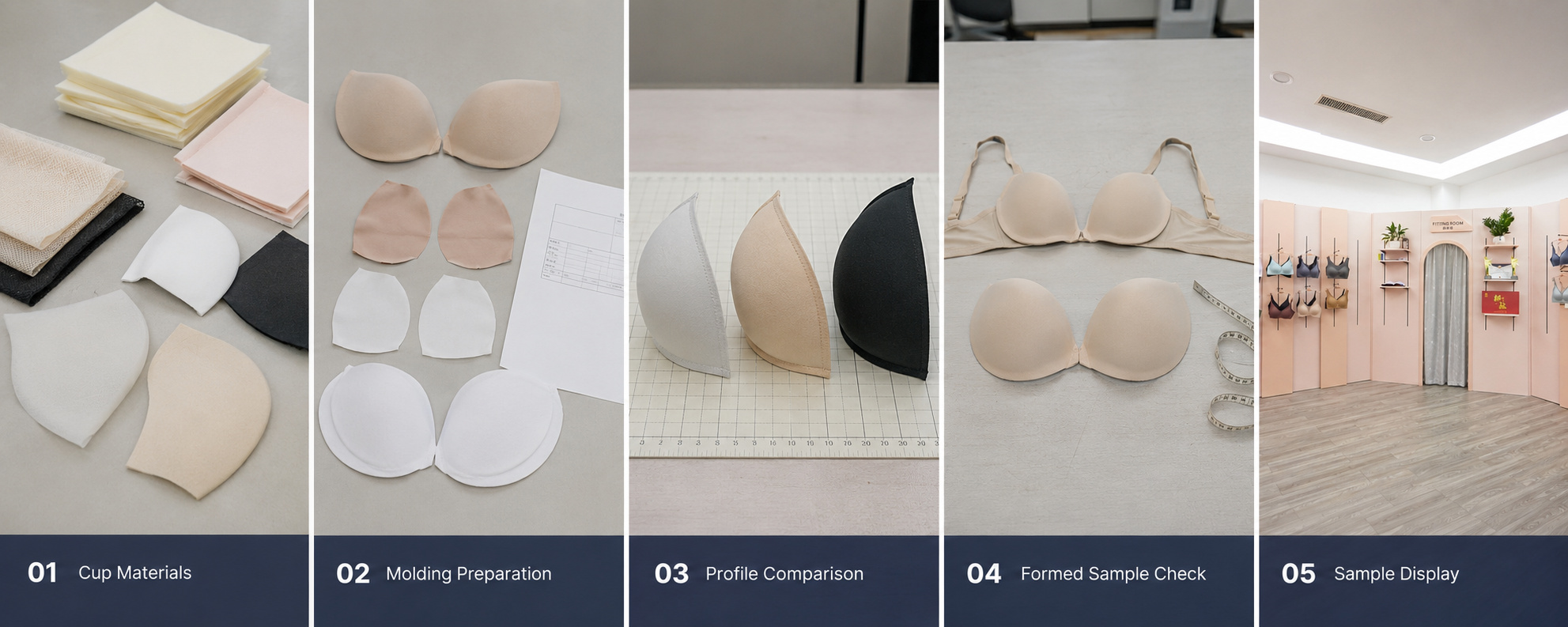 Molding Sample and Tooling Review
Cup molding should be evaluated during sampling before bulk production begins. The review covers cup height, depth, left-to-right symmetry, edge condition and compatibility with the cradle, band and selected support structure.
Existing cup forms may be suitable for some projects. A new or adjusted profile may require further pattern and tooling evaluation. Final feasibility depends on the requested size range, material, construction and order quantity.
The molded cup must also fit the approved bra pattern. A cup profile cannot be assessed separately from the band, wing, bridge, wire or wireless structure. Changes to padding thickness or cup depth may require corresponding pattern and fit revisions.
Heat Bonding for Suitable Bra Constructions
Heat bonding may be used for selected seamless edges, layered support panels, laminated materials or bonded sports bra constructions. Bonding films, adhesives and fabric layers need to be compatible with the required temperature and pressure.
Process settings affect bond strength, edge appearance, flexibility and finished dimensions. Too much heat or pressure may create visible marks, stiffness or material distortion. Insufficient bonding can cause lifting, bubbles or separation during use.
Bonding is therefore confirmed using the production material set and approved sample. The construction should not be selected only because it produces a clean visual appearance; it must also provide the required support and stability.
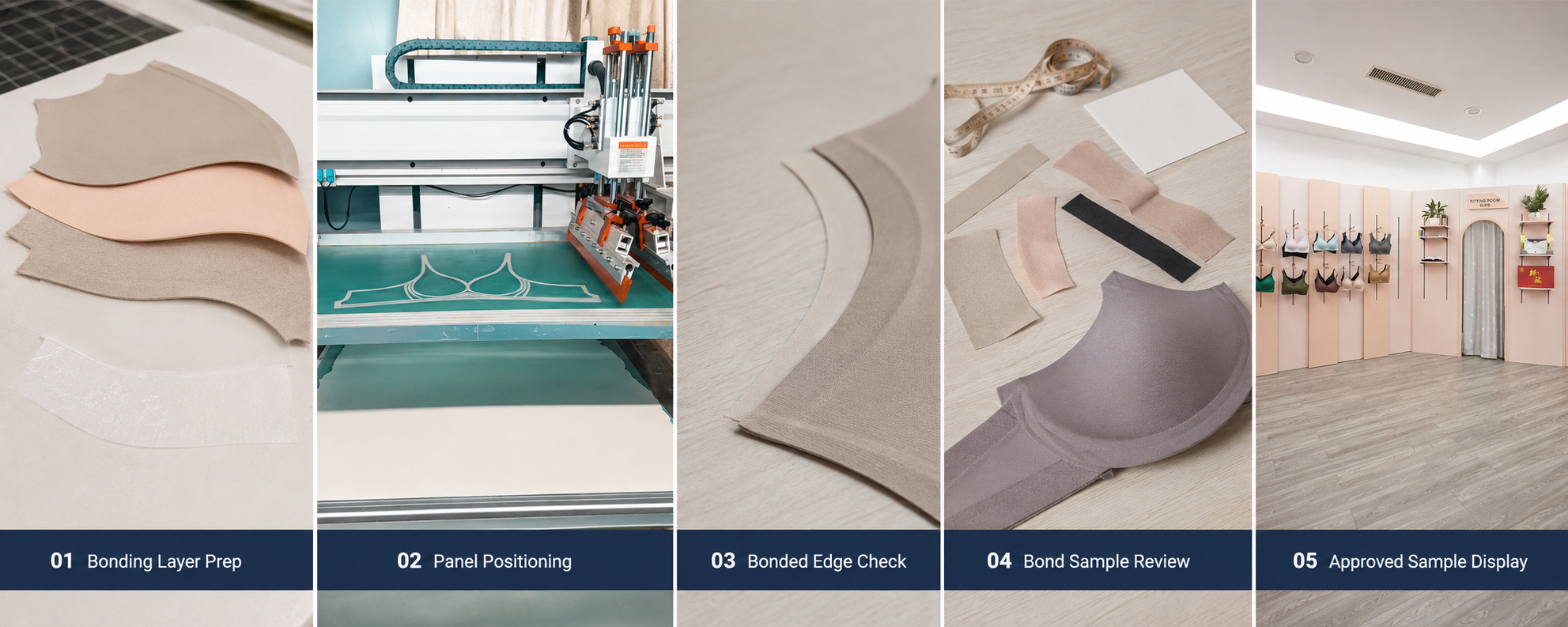 Bulk Production Controls
During bulk molding and bonding, the team monitors the approved processing method and checks output at defined production stages. Review points may include cup profile, symmetry, surface appearance, edge condition, bonded alignment and material distortion.
Completed components are compared with the approved sample before being transferred to bra assembly and finishing. Finished bras later undergo size, cup and symmetry inspection to confirm that molded and bonded parts remain consistent after assembly.
Information Needed for Quotation and Sampling
For evaluation, buyers should provide a tech pack or reference sample, cup size range, required profile, padding thickness, fabric composition, support level, order quantity and any bonded construction details.
Custom materials, special cup profiles, wide size ranges or new tooling can affect sample cost, MOQ and lead time. Final pricing and production timing are confirmed after the construction, materials and development requirements have been reviewed.