
Inspection Based on the Approved Specification
Bra inspection is not limited to checking general appearance. Cup shape, band dimensions, left-to-right symmetry and strap positioning can directly affect fit, support and consistency across a bulk order.
Before production inspection begins, we refer to the approved measurement sheet, size chart, construction specification and pre-production sample. The inspection points depend on the bra type, cup construction, materials and requested size range.
For OEM and private-label buyers, clear tolerances should be confirmed during size grading and fit adjustment rather than decided after bulk production has already started.
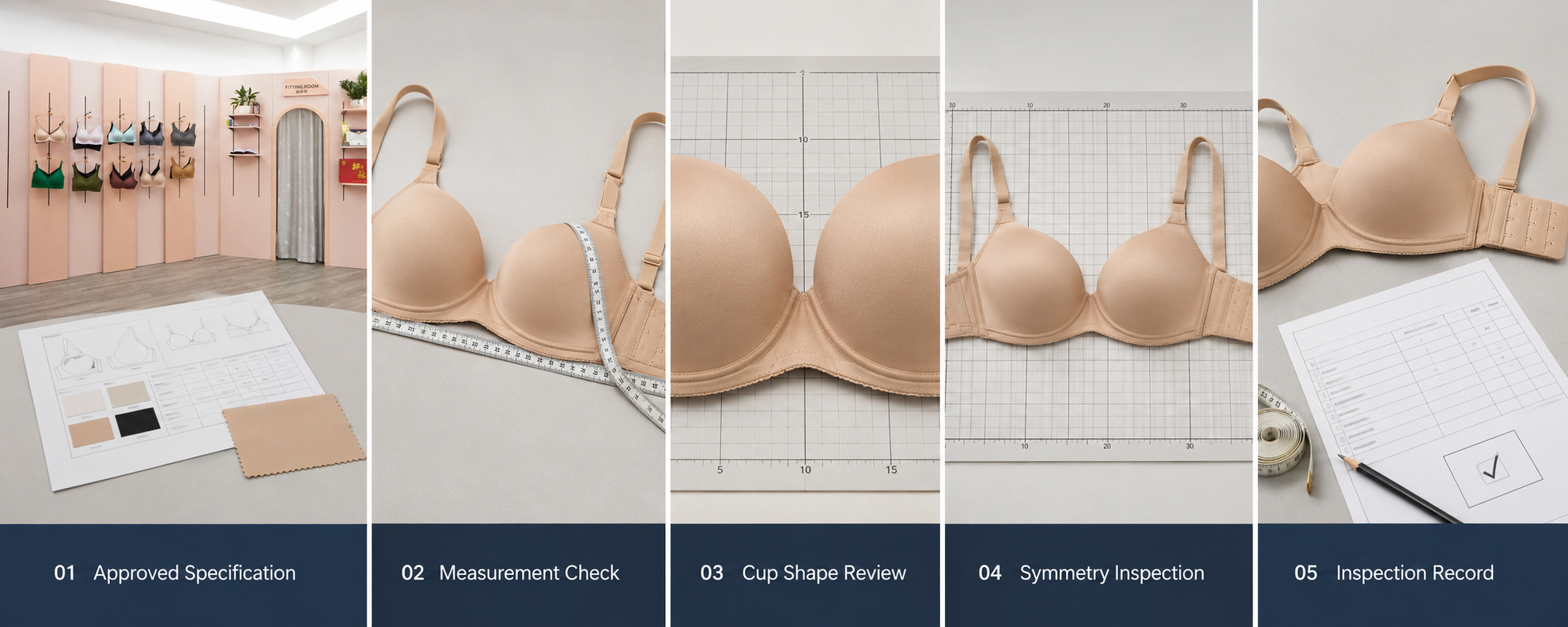 Key Bra Measurements We Check
Inspection points are selected according to the approved style. Common checks may include underband length, cup width and height, center-front height, wing height, strap length, strap position and hook-and-eye placement.
Measurements must be taken using the same agreed method. Pulling an elastic section too tightly or measuring a molded cup from a different position can produce misleading results. For stretch styles, the relaxed measurement method and allowable tolerance should be established before production.
We normally review the base size first and then check selected sizes across the graded range. Extended-size programs require closer attention to cup proportion, wing support, strap width and the relationship between the band and cup.
Cup Shape and Profile Review
Molded, padded, cut-and-sew and wireless cups require different inspection methods. Molded cups are reviewed for profile consistency, dents, wrinkles, surface marks and deformation. Sewn cups are checked for panel alignment, seam shape and the consistency of the left and right sides.
Padding should sit evenly without twisting or shifting. Removable pads must match the approved shape and fit correctly inside the pad pockets. For wired styles, the cup, wire channel and underwire must work together without creating distortion.
Issues caused during cup molding and heat bonding should be identified before the products move into final packing.
Left-to-Right Symmetry Inspection
A bra contains paired components, so small assembly differences can become clearly visible on the finished product. We compare cup height, neckline shape, strap attachment points, wing length, elastic tension and trim placement on both sides.
The bra is placed flat in a consistent position before comparison. Inspectors also review whether cups sit evenly, the center front is aligned and the hook-and-eye closure closes without pulling the garment off center.
Decorative lace, printed motifs and binding positions are checked where their alignment is part of the approved appearance. Natural variation in lace patterns should be distinguished from actual assembly defects.
Appearance and Construction Checks
Measurement results alone do not confirm that a bra is ready for shipment. The finished garment is also reviewed for skipped stitches, loose threads, puckering, uneven elastic attachment, exposed seam allowances, stains, shade variation and damaged components.
Labels must be correct for the style and size and attached in the approved position. Adjustable straps, sliders, rings and hook-and-eye closures are checked for assembly and basic function. These points follow the construction controls used during bra assembly and finishing.
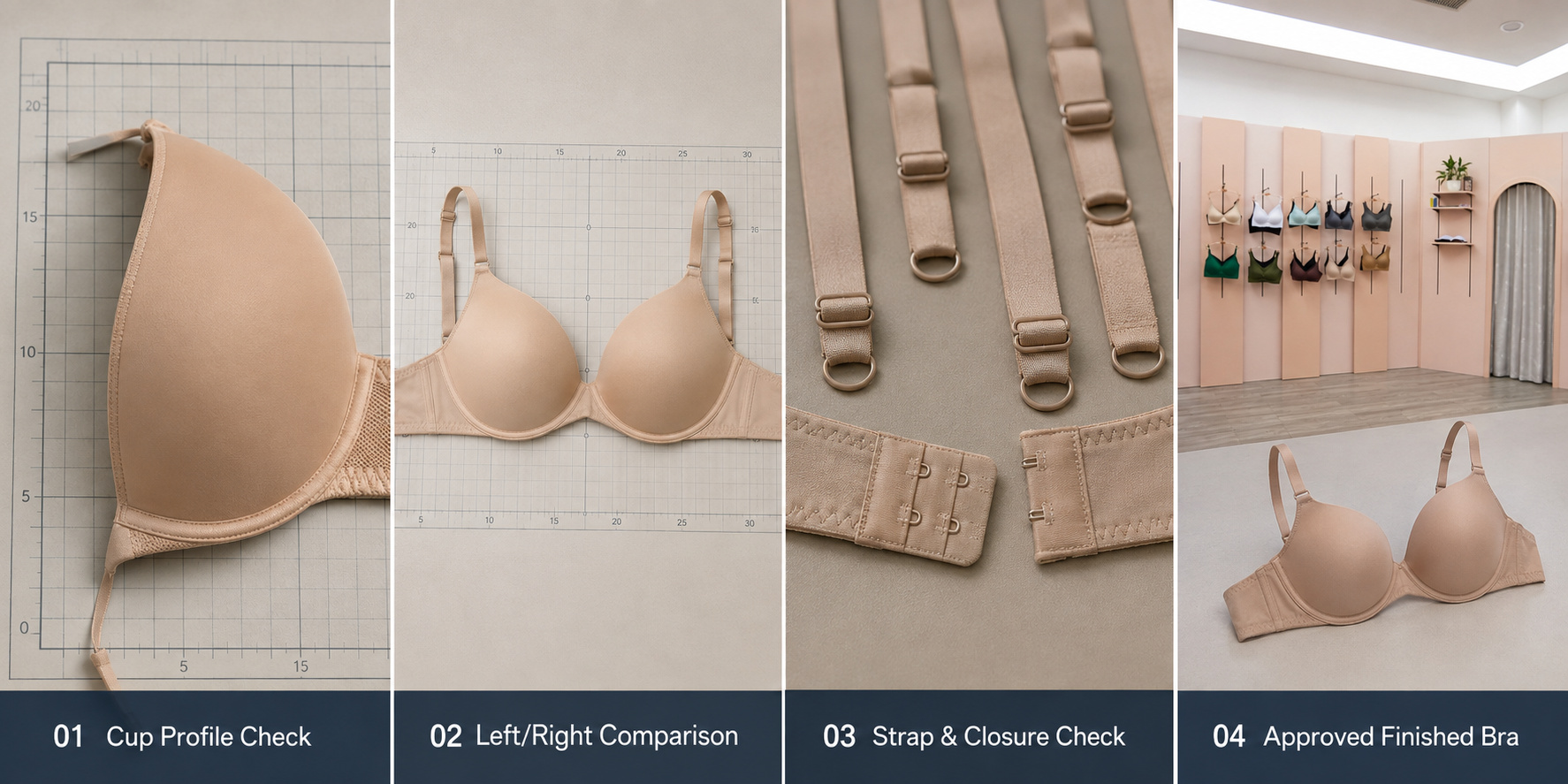 In-Process and Final Inspection
Checks should be performed during production as well as after completion. In-process inspection helps identify repeated measurement, sewing or assembly problems before they affect the full order.
Final inspection covers the agreed sampling level or buyer inspection requirement, including measurements, appearance, branding, labels, size assortment and quantity. Third-party inspection can also be coordinated when requested by the buyer.
Products are released for packing only after the required inspection results are accepted and any identified issues have been reviewed.
Information Buyers Should Confirm
For an accurate inspection plan, please provide the approved size chart, measurement method, tolerances, size and color breakdown, reference sample and any market-specific labeling or testing requirements.
Also identify the measurements or appearance points that are critical to your product. Clear inspection criteria allow the sampling team, production line and QC team to work from the same standard from approval through bulk delivery.