
Sewing Bra Components to the Approved Construction
Bra sewing begins after the fabric, lace, lining and other panels have been cut and identified by style, color and size. Each operation follows the approved sample, construction details and measurement specification.
The required sewing sequence depends on the product. A lace underwire bra, wireless bralette, nursing bra and sports bra use different seams, elastic tensions, cup structures and supporting components. Production instructions therefore need to confirm how panels, cups, wings, straps, elastic, closures and trims should be assembled.
You can review the previous production stage on our material inspection and fabric cutting page.
Sewing Methods for Different Bra Structures
Production may use lockstitch, zigzag, overlock, coverstitch, bartack and elastic-attaching equipment. The machine and stitch type are selected according to the fabric stretch, seam position, construction and required appearance.
Overlock stitching can join or finish suitable stretch-fabric edges, while zigzag stitching is commonly used where controlled flexibility is required. Bartacks may reinforce selected stress points, such as strap connections or closure areas, when specified for the style.
Thread type, stitch density and seam allowance should remain consistent with the approved sample. Incorrect settings can cause skipped stitches, puckering, broken threads, distorted edges or insufficient stretch.
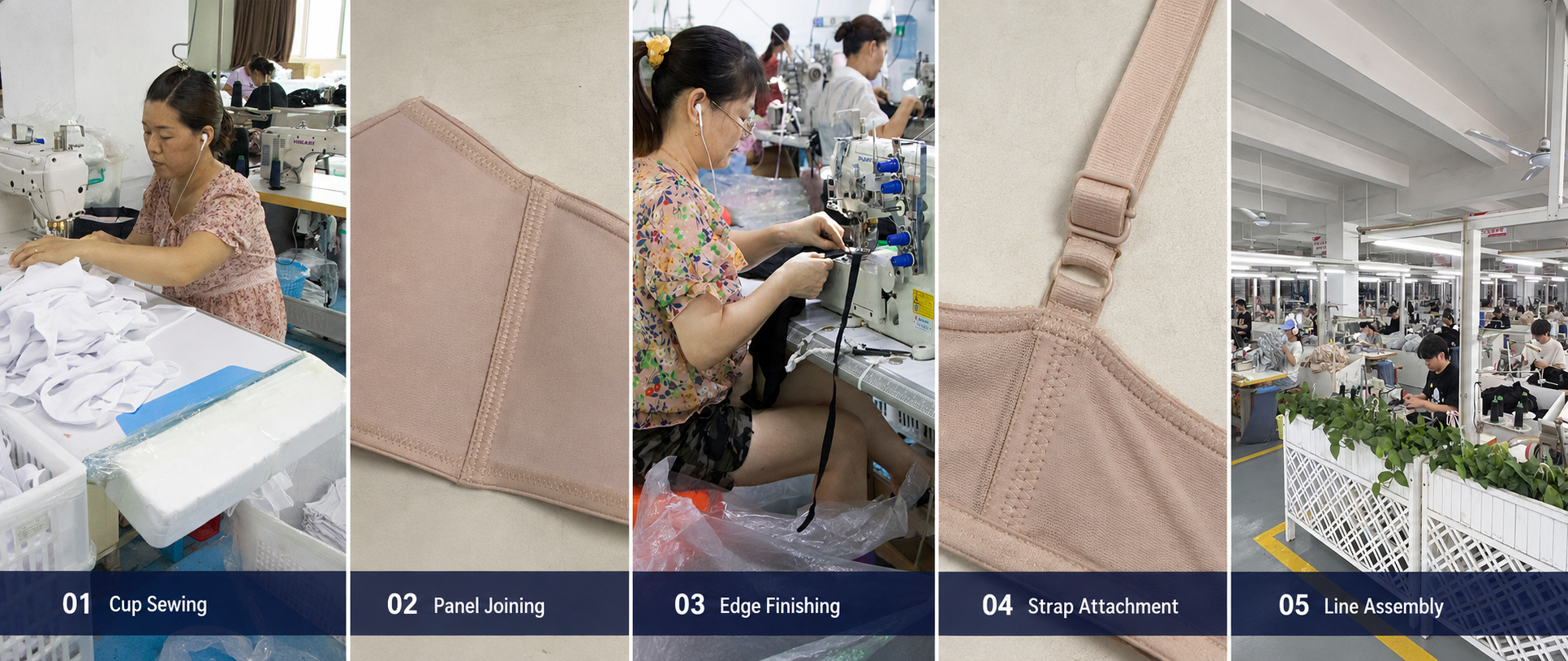 Elastic Attachment and Tension Control
Elastic attachment affects band measurement, support, comfort and fit consistency. Elastic may be applied around the underband, wing, neckline, armhole or other style-specific areas.
The operator controls how the elastic is fed while sewing. Excessive tension can shorten the band, curl the edge or make the garment uncomfortable. Insufficient tension may produce loose edges, weak recovery or inconsistent support.
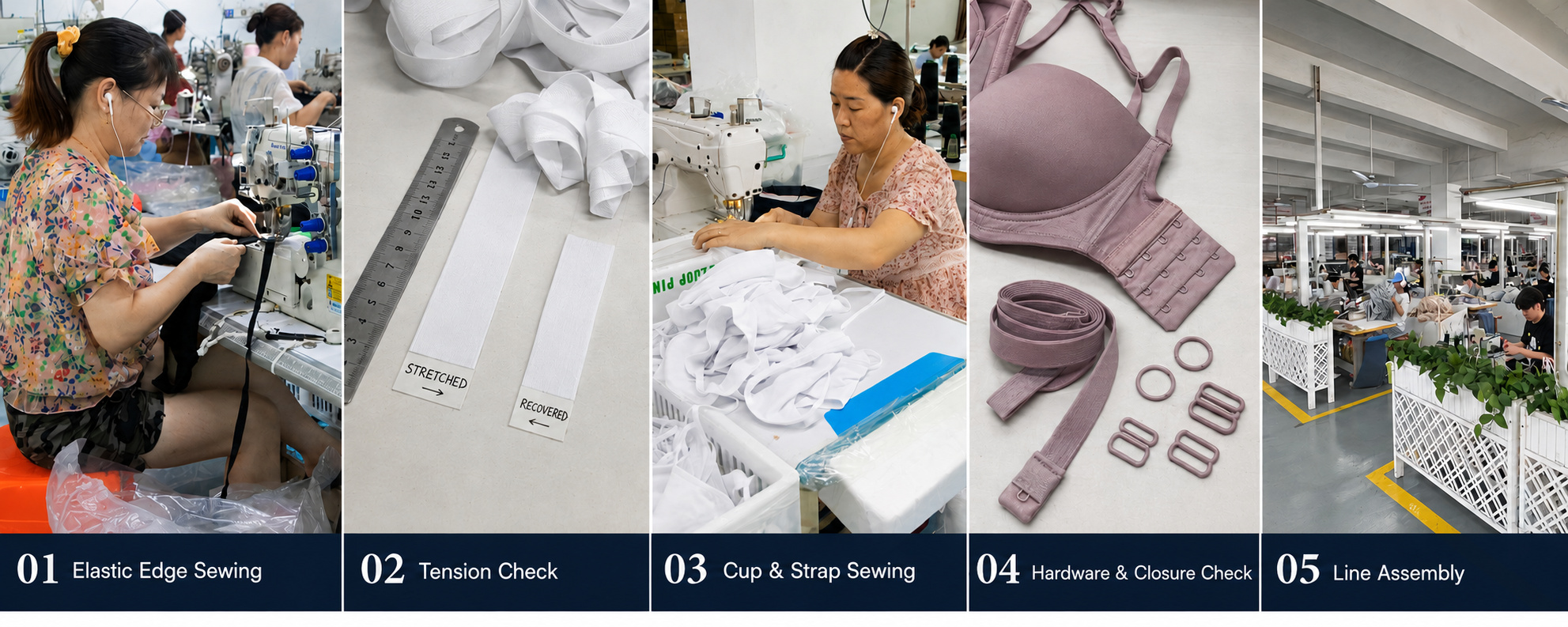
Material behavior must also be considered. Two elastics with a similar appearance can have different stretch and recovery, so the bulk material should match the approved specification. Elastic tension is checked during sample development and monitored during production rather than judged only after final assembly.
For projects still confirming fabrics, elastic and related components, see our fabric, lace and component options.
Straps, Closures and Supporting Components
Bra straps may include fixed, adjustable, convertible or removable constructions. Strap width, elastic performance, ring and slider size, attachment position and reinforcement method are confirmed according to the approved design.
Hook-and-eye closures, front closures, nursing clips, underwire channels and other components must be positioned correctly and securely attached. The wrong component size or placement can affect function, appearance and finished measurements.
For plus size and higher-support programs, strap attachment, wing construction and underband stability require particular attention. These products should follow the approved graded pattern instead of using one sewing setting across every size.
In-Process Sewing Checks
During production, checks may cover stitching appearance, seam alignment, elastic attachment, strap position, closure placement, cup balance, left-to-right symmetry and key measurements. Recurring problems are corrected before more units move through the same operation.
Finished sections are also checked for loose threads, skipped stitches, needle damage, puckering, twisted elastic and incorrect components. Findings are compared with the approved sample and order specification.
 Information Needed Before Sewing Production
Buyers should provide a tech pack or approved sample, construction details, seam requirements, size chart, material specification and component list. Reference photos alone may not show seam allowances, internal layers or elastic tension requirements clearly enough for bulk production.
Bulk sewing starts after the required sample, graded pattern and production materials have been approved. After assembly and finishing, completed bras proceed to size, cup and symmetry inspection before packing.