
Materials Selected for the Bra Construction
Cevaniq Bras supports material and component selection for sports bras, lace bras, bralettes, nursing bras, plus size bras and invisible bras. Materials are chosen according to the product structure, support level, target market, size range, price position and intended use rather than appearance alone.
Development can begin with a buyer-specified fabric, physical swatch, reference sample or a performance requirement. Before sampling, we review fabric composition, weight, stretch direction, recovery, surface, color and compatibility with the cup, elastic and sewing or bonding method.
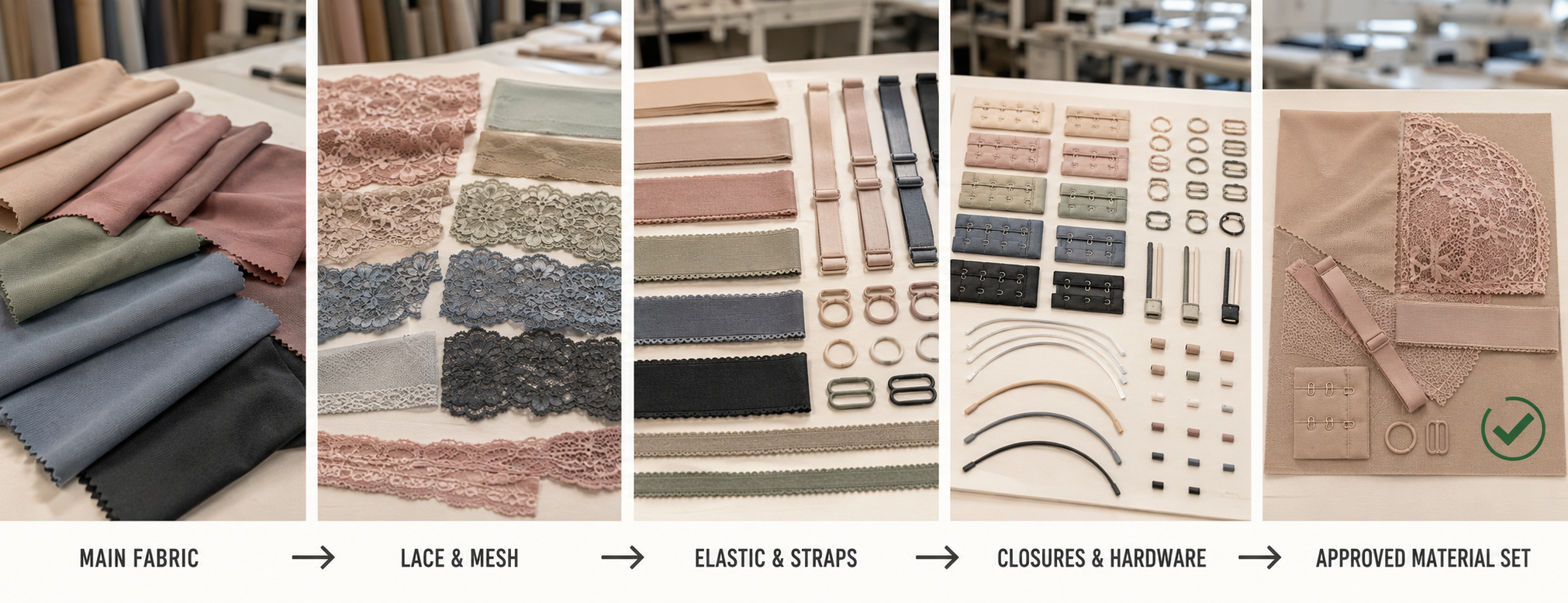 Main Fabric Options
Common material directions include nylon/spandex, polyester/spandex, cotton blends, mesh, lace and seamless yarn. Selected functional fabrics may also be considered for sports or maternity programs when the required performance and order quantity are confirmed.
Important fabric details include:
- Composition and fabric weight
- Two-way or four-way stretch
- Stretch and recovery
- Surface texture and softness
- Opacity and lining requirements
- Color availability
- Dye-lot consistency
- Material MOQ
A fabric with insufficient recovery can affect band stability and support, while a fabric that is too rigid may change fit and comfort. Final materials should therefore be tested through sampling before bulk purchasing.
Lace, Mesh and Lining Selection
Lace patterns vary in width, repeat, stretch and edge design. These details affect cutting layout, seam placement, visual symmetry and material consumption. For bras requiring matched lace across the cups or center front, the repeat and orientation should be confirmed before quotation.
Mesh and lining can be used to reinforce the cup, wings, neckline or other structural areas. Their stretch and softness should be compatible with the main fabric to reduce pulling, distortion or uneven support.
Custom lace development or specially dyed lace may require a higher MOQ and longer material lead time. Available lace may be used for lower-risk sampling before a custom color is approved.
Elastics, Straps and Support Components
Elastic width, thickness and recovery influence the underband, neckline, armhole and wing support. Shoulder straps must also be selected according to the cup construction, size range and intended support level.
Options may include:
- Underband and edge elastic
- Adjustable shoulder straps
- Rings and sliders
- Binding and decorative trim
- Fixed or removable padding
- Molded or soft cup components
- Underwire and wire channels
- Hook-and-eye closures
Cup and padding details should be coordinated through our Cup, Padding & Construction Options service because foam density and cup shape can affect fit, grading and material consumption.
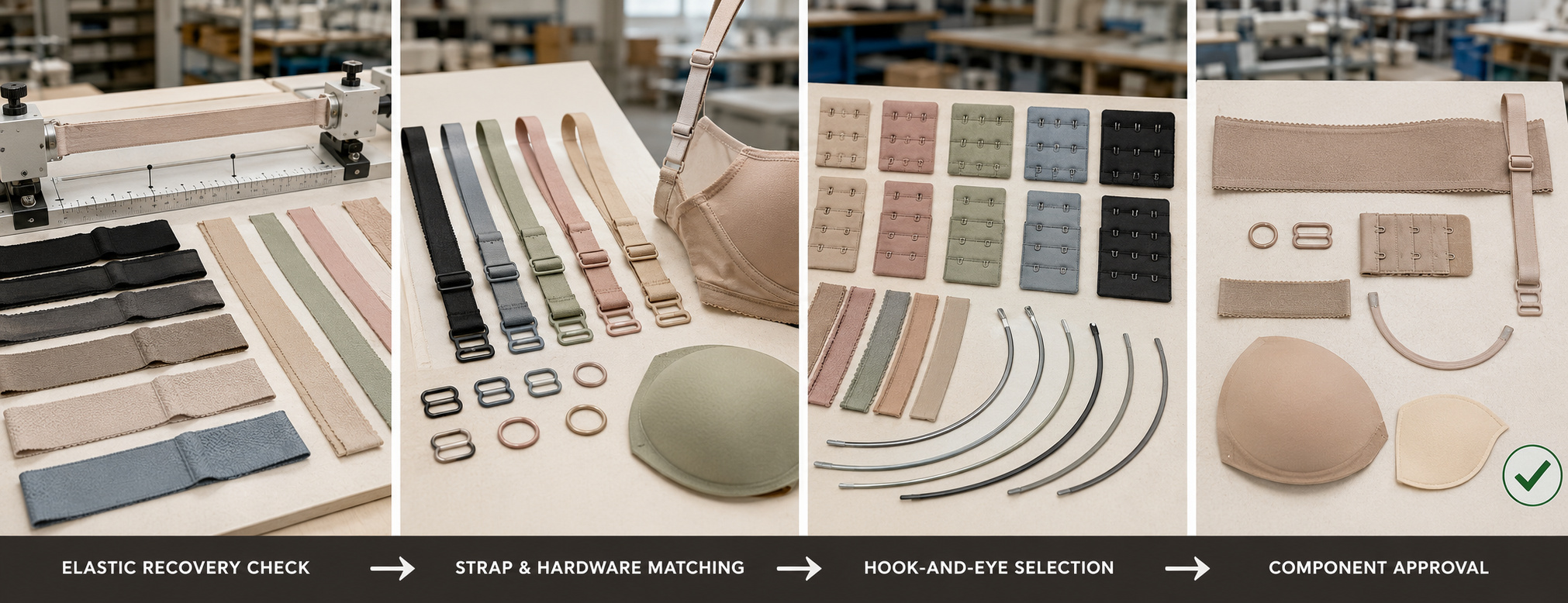 Color and Material Sample Approval
Buyers can provide a Pantone reference, physical swatch or approved product sample for color matching. Main fabric, lace, elastic, straps and closures may react differently during dyeing, so each visible component should be checked as part of the complete material set.
Material approval normally covers:
- Color and shade
- Fabric surface
- Lace pattern
- Stretch and recovery
- Cup and padding
- Elastic and straps
- Hardware finish
- Closure specification
Custom colors and coordinated branding can be developed through Custom Colors, Labels & Logo.
Incoming Material Check and Bulk Consistency
Approved materials are recorded before bulk production. Incoming fabric, lace, elastic and components are checked against the confirmed specification for color, surface condition, dimensions and relevant order requirements before cutting or assembly.
More details are covered on our Material Inspection & Fabric Cutting page. Materials requiring composition, colorfastness, dimensional stability or restricted-substance testing can be submitted for third-party testing according to buyer and destination-market requirements.
MOQ, Sampling and Quotation Requirements
Standard bra orders generally start around 300–500 pieces per style. Custom-dyed fabric, exclusive lace, special elastic or private-label material programs commonly require around 500–1,000 pieces or more, depending on supplier MOQ and color quantity.
For a material quotation, send the bra style, preferred composition, fabric or lace reference, color, size range, quantity, cup construction and required performance. We will review availability, alternatives, sampling requirements, material MOQ and estimated lead time before confirming the material plan.