
Size Development Based on the Target Market
Cevaniq Bras supports size grading and fit adjustment for lingerie brands, importers and private-label buyers developing sports bras, lace bras, bralettes, nursing bras, plus size bras and invisible bras.
Development begins with the buyer’s measurement chart, base size, required band and cup range, target market and intended support level. We review how the cup, cradle, bridge, wings, straps, elastic and closure work together before preparing the graded size specification.
Using a standard size chart without considering the actual construction can create inconsistent fit. Fabric stretch, cup type, padding thickness and elastic recovery may all change the finished measurements and wearing performance.
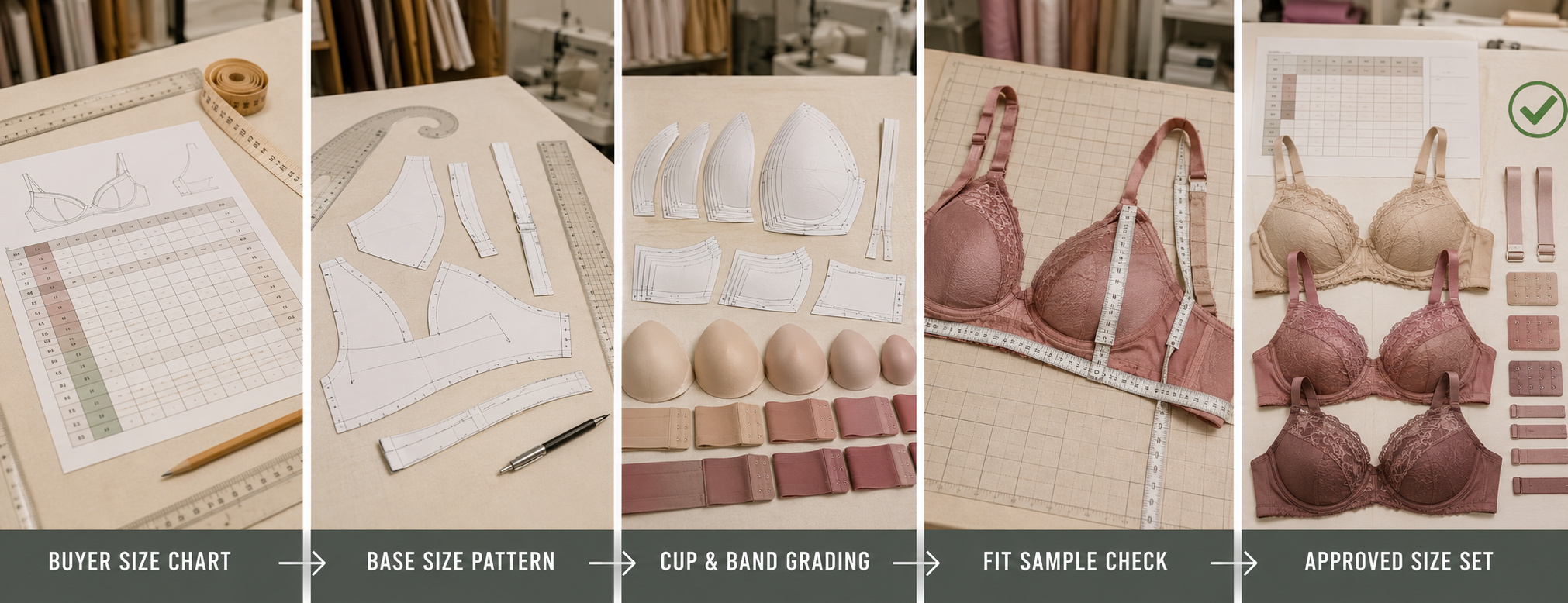 Buyer Size Chart and Base Size Confirmation
Buyers should provide the intended size system and complete measurement chart whenever available. Important information can include:
- Band and cup size range
- Underband measurements
- Cup width and depth
- Center-front dimensions
- Wing height
- Strap length and position
- Hook-and-eye arrangement
- Measurement tolerances
If the project is based on a reference sample, the sample measurements are compared with the requested chart. Differences should be resolved before grading because an incorrect base size will affect every subsequent size.
Projects without a completed specification can begin through our Bra Product Development process.
Cup, Band and Pattern Grading
Bra grading is not a simple proportional enlargement. Cup volume, wire or cradle shape, center bridge, side wings, straps and support components may require different adjustments as the band and cup size increase.
For plus size programs, particular attention is given to cup-to-band proportion, wing stability, strap width, elastic performance and closure configuration. Nursing bras may require graded opening structures and adjustable support, while sports bras must maintain the intended support and coverage across the requested size range.
The selected cup, padding and construction options must be confirmed before final grading because foam thickness, removable padding and molded cup availability can limit or alter the size plan.
Fit Sample Review and Adjustment
A fit sample is checked against the approved measurement specification. Review points may include cup shape, cup positioning, band length, bridge width, wing height, strap placement, neckline, armhole and overall symmetry.
Buyer comments should identify the size tested, measurement differences and the exact area requiring adjustment. Photographs, marked samples and updated measurement sheets help the sampling team distinguish a construction issue from a material or sizing issue.
Common revisions may involve:
- Adjusting cup volume or coverage
- Changing band or wing dimensions
- Repositioning or widening straps
- Modifying elastic tension
- Correcting bridge or neckline shape
- Revising closure placement
- Balancing left and right components
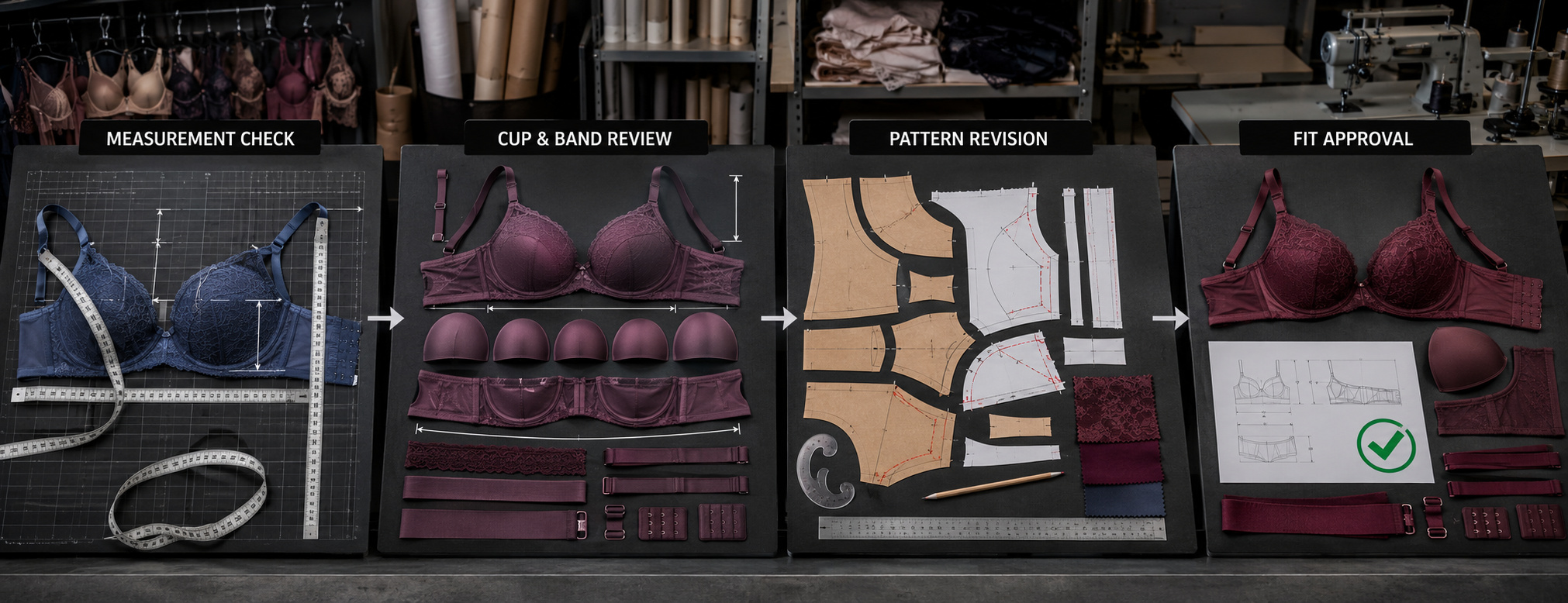 Pre-Production Size Approval
After the base-size fit is accepted, the graded measurement chart and patterns are prepared for the required size range. Additional size samples may be requested for extended cup or band ranges where proportional changes are more significant.
The approved fit sample, graded measurements and construction specification become the references for cutting, sewing and size, cup and symmetry inspection. Bulk checks focus on key measurements, cup proportion, strap position, symmetry and comparison with the approved sample.
Changes requested after grading or pre-production approval may require new patterns, additional samples or revised material consumption.
Information Required for Size and Fit Review
For an accurate evaluation, send the bra style, base sample or tech pack, measurement chart, size range, target market, fabric stretch, cup construction, support requirements and estimated order quantity.
Existing samples normally take around 3–5 days. Custom fit development generally requires around 7–15 days, depending on construction, material availability and revision rounds. Bulk production usually takes around 25–40 days after sample and material approval, while complex size ranges or peak-season orders may require longer.