
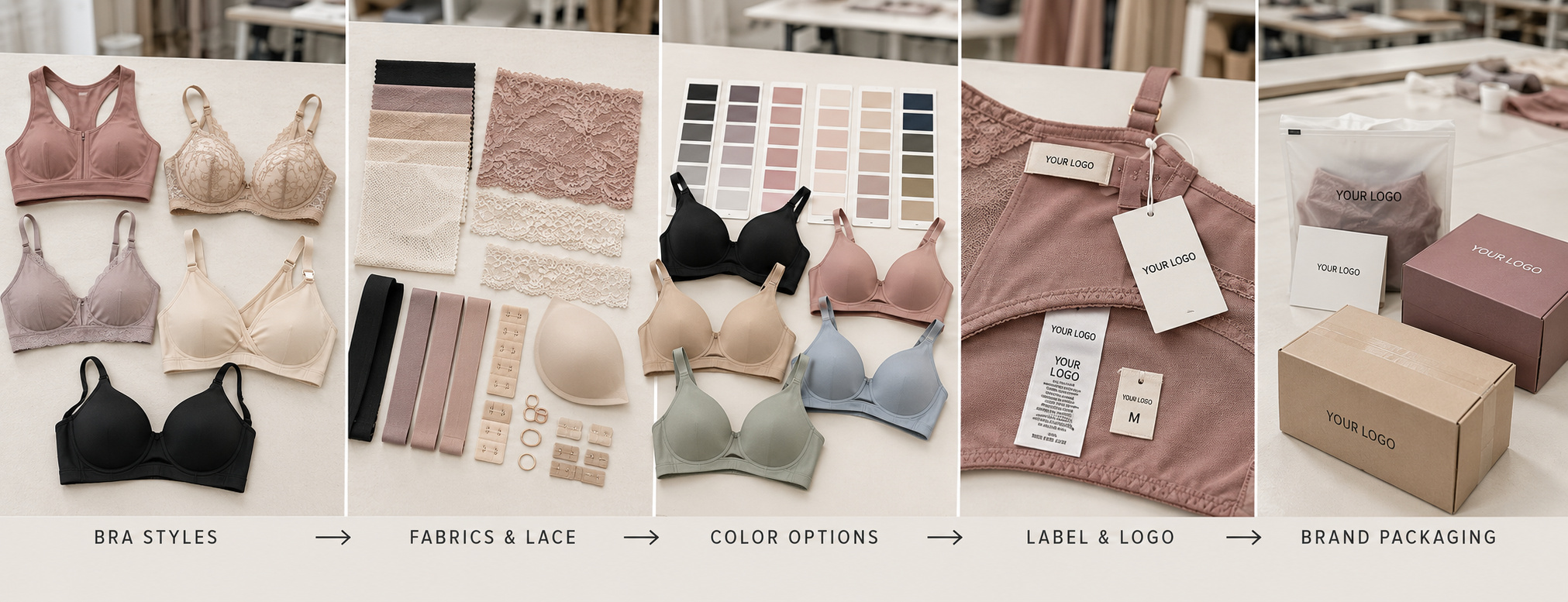
 Custom Bra Programs Based on Your Product Requirements
Cevaniq Bras supports custom and OEM bra programs for lingerie brands, importers, wholesalers, distributors and organized retail buyers. Development can begin with a tech pack, measurement sheet, sketch, physical reference sample or a selected factory style that needs modification.
Before sampling, we review the intended bra category, target market, size range, cup construction, support level, fabric, color, order quantity and branding requirements. This initial review helps identify which details can use existing materials and components and which may require new pattern development, custom-dyed fabric or specially sourced trims.
Our custom programs cover sports bras, lace bras, bralettes, nursing bras, plus size bras and invisible bras. Each category requires a different approach to fit, support, material selection and construction, so specifications are confirmed by product rather than applying one standard solution to every order.
Product Style and Sample Development
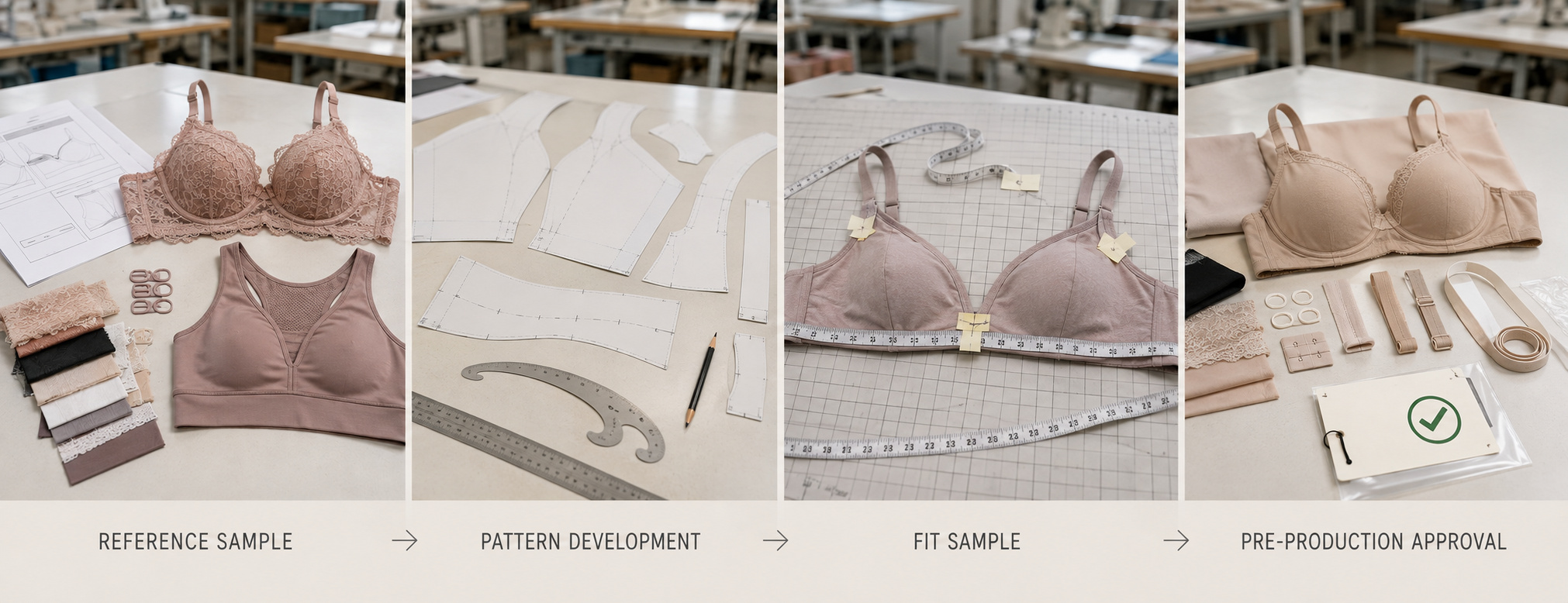
OEM development can follow the buyer’s original design or adapt an existing product. The Bra Product Development process may include construction review, pattern preparation, prototype sampling, fit evaluation and revisions before the production specification is approved.
For a new inquiry, buyers should provide as much of the following information as possible:
- Tech pack, drawing, product image or reference sample
- Measurement chart and requested size range
- Cup, padding, wire and support requirements
- Preferred fabric, lace, elastic and trims
- Target quantity by style and color
- Label, logo and packaging requirements
- Destination market and required testing
A product photograph can help identify the general style, but it is normally insufficient for an accurate OEM quotation. Cup construction, internal layers, elastic specifications and size grading can materially affect sampling cost, MOQ and production time.
 Size, Fit and Construction Customization
Bra development requires more than changing the outside appearance. Band dimensions, cup proportion, wing height, strap position, elastic recovery and support structure must work together across the requested size range.
Our Size Grading & Fit Adjustment support is based on the buyer’s measurement chart, target market and approved sample. Plus size programs require particular attention to cup-to-band proportion, side support, strap width and grading rather than simply enlarging a standard pattern.
Construction options may include soft or molded cups, fixed or removable padding, wireless or underwire support, adjustable straps, hook-and-eye closures and selected bonded structures. Final feasibility depends on the style, materials, required sizes and available component specifications.
Fabrics, Lace, Colors and Components
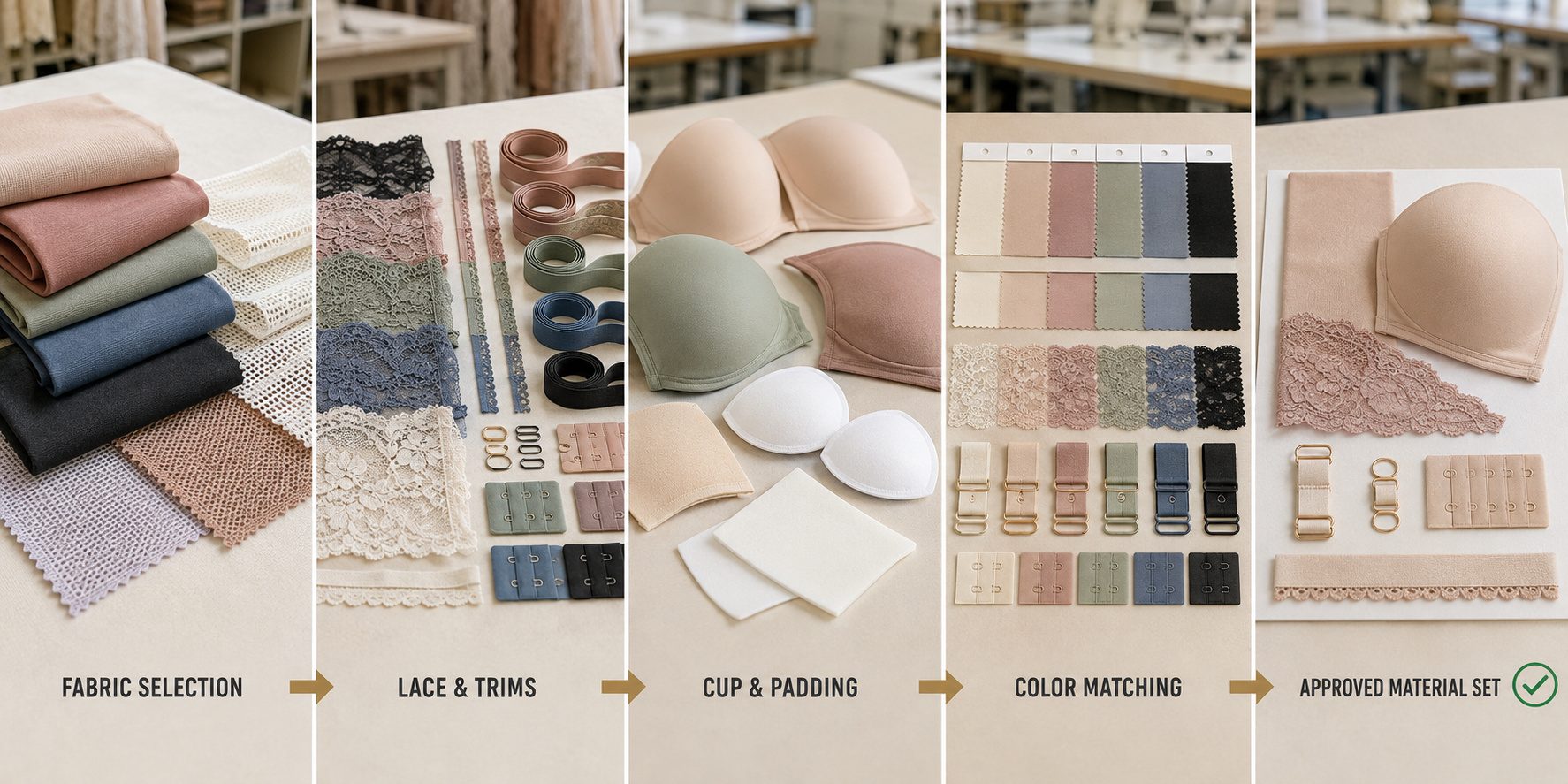
Available material directions include nylon/spandex, polyester/spandex, cotton blends, lace, mesh, seamless yarn, foam cups and selected functional stretch fabrics. Components can include elastics, shoulder straps, sliders, hooks and eyes, wires, bindings and decorative trims.
Through our Fabric, Lace & Component Options service, materials are reviewed for appearance, stretch, recovery, comfort, support and compatibility with the selected construction. Custom colors may be matched against a Pantone reference or approved swatch, subject to fabric availability and dye-lot MOQ.
Material substitutions must be approved before production. A lace pattern, elastic tension or foam density that looks similar can still change the finished fit and support, so bulk materials are checked against the approved specification.
 Custom Logo, Labels and Private Label Packaging
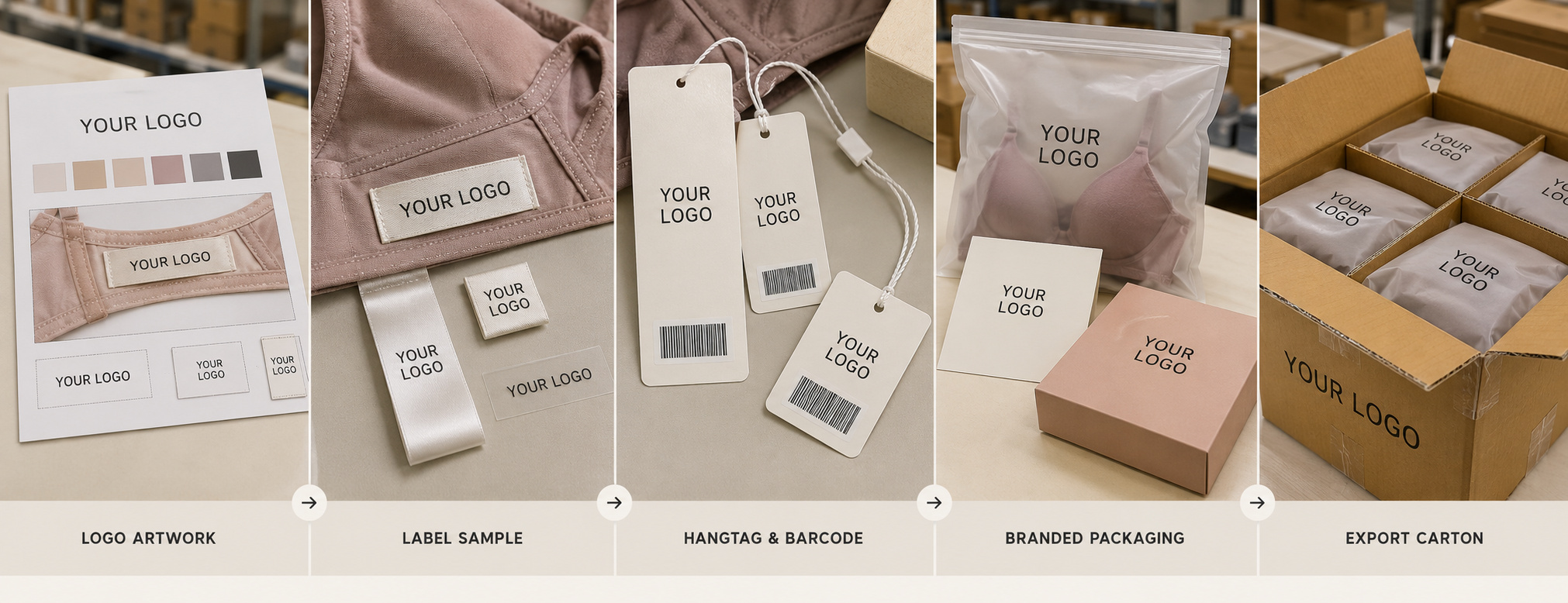
Private-label options can include main labels, size labels, care labels, heat-transfer labels, woven labels, hangtags, barcode labels and selected logo applications. The Custom Colors, Labels & Logo page explains the information needed to confirm artwork, dimensions, placement and color.
Buyers should provide editable artwork, label content and any destination-market labeling requirements. Logo and label samples are checked for position, readability, color and attachment before they are released for bulk production.
Packaging can include standard or branded polybags, insert cards, hangtags, barcode stickers, retail color boxes and export cartons. Packing is planned around product structure, size and sales channel. Molded and invisible bras may require additional cup or surface protection to reduce deformation during storage and export shipment.
 MOQ, Sampling and Pre-Production Approval
Standard bra orders usually start around 300–500 pieces per style. Custom colors, fabrics and private-label programs commonly require around 500–1,000 pieces or more, depending on material MOQ, color quantity, construction and size assortment.
Existing samples normally take around 3–5 days. Custom development usually requires around 7–15 days, excluding delivery time and additional fit revisions. Sample cost is confirmed after reviewing the design, materials and construction.
Bulk production begins after the required sample, material, color, label and packaging approvals. A pre-production sample may be used to lock the final construction and workmanship standard. Normal production is approximately 25–40 days after approval, while complex styles and peak-season orders may require around 40–50 days.
Information Required for an OEM Quotation
For an accurate quotation, send the style or tech pack, size chart, quantity by color, preferred materials, cup construction, logo, labels, packaging, destination market and required delivery window.
We will review development feasibility, material MOQ, sample requirements, estimated production time and the information still requiring confirmation before preparing the order plan.